Best Hidden Beaches in Bali 2026 — Local Picks for Nomads

By VisitBali Team  ·  11 min read  ·  15 May 2026

Best Hidden Beaches in Bali 2026 — Local Picks for Nomads

Bali’s coastline still holds quieter stretches where you can work from a shaded warung, swim between clients’ calls and catch a jaw-dropping sunset without the crowds. This guide focuses on lesser-trafficked Beaches across the south, north and east — places that suit remote work rhythms and weekend escapes in 2026.

I’ve lived and surfed around Bali for years, and I’m writing from experience: realistic travel times through Bali traffic, typical costs in IDR and USD, what to pack (and leave at your guesthouse), plus the best months and times of day to visit each spot. If you need solid recommendations for Wi‑Fi-friendly cafés, driver hires or fast-boat options, they’re here too.

Bali’s coastal scene in 2026 has pockets of calm for digital nomads who want time by the sea without sacrificing connectivity. Below are the Beaches I return to when I need quiet sand, clear water for a midday snorkel and decent coffee for a late-afternoon sprint of work. Each entry includes travel time, costs, safety notes and local etiquette.

Beaches to Bookmark in 2026

Green Bowl Beach (Uluwatu area)

Green Bowl Beach — secluded cove below limestone cliffs, Uluwatu, Bali
Photo: Tom Fisk on Pexels

Green Bowl is a narrow cove accessed down a long stair cut into limestone cliffs. The walk down takes effort, but the bay is sheltered with very clear water.

  • Location & access: About 45–70 minutes from Canggu or Seminyak depending on traffic; expect 1–1.5 hours from Ubud. The last section is steps (around 300–400 steps).
  • Why go: Quiet mornings with calm water—good for swimming and light snorkeling near the rocks.
  • Practicalities: No official shops at the base. Bring water and snacks. Small parking or access fee commonly IDR 5k–20k (USD 0.30–1.40). No lifeguard.
  • Best time: Early morning (6–9am) for calm sea, soft light and fewer people.
  • What to wear: Reef shoes for the rocky shoreline; sun protection and a cover-up for the climb back up.
  • Travel tip: Combine with Uluwatu Temple at sunset (allow extra travel time) or a surf session at Padang Padang earlier in the day.

Nyang Nyang Beach (Uluwatu)

Nyang Nyang Beach — aerial view with lighthouse and white-sand bay below Uluwatu cliffs, Bali
Photo: Tom Fisk on Pexels

A wide, open bay with long sand and dramatic cliffs. Access is via a steep path and a few river crossings in the dry season.

  • Travel time: 45–75 minutes from Seminyak/Canggu; traffic around Uluwatu can double travel time at peak sunset.
  • Why go: Expansive sand and minimal infrastructure make it perfect for a long afternoon walk or a relaxed day of low-key remote work under a beach umbrella.
  • Practicalities: Park and access fees often IDR 10k–20k. The beach has strong currents—swim with caution and avoid deep water after rains.
  • Best time: Late afternoon for photos; mornings are best for calmer surf.
  • Nearby: Short drive to Balangan Beach cafés for a post-beach coffee.

Tegal Wangi Beach (Jimbaran)

Tegal Wangi Beach — cove and cliffs above the turquoise Jimbaran coast, Bali

A tucked-away stretch popular for natural hot pools and sunset cliffs, close to Jimbaran but far quieter.

  • Travel time: 20–35 minutes from Jimbaran or Kuta; 40–60 minutes from Seminyak.
  • Why go: Clifftop caves and pools that fill at low tide—good for quick dips and sunset photos.
  • Practicalities: Some cliff access is uneven; wear closed-toe shoes. Small entrance or parking contributions are normal (IDR 10k–30k).
  • Best time: Sunset for warm light and fewer crowds.
  • What to bring: A sarong or light cover for evening walks; it can get breezy on the cliffs.

Balangan Beach (Uluwatu)

Balangan Beach — long sandy bay with cliffs and surfers, Uluwatu peninsula, Bali
Photo: Polina Kuzovkova on Unsplash

A long, sandy bay popular with surfers but far less built up than Kuta or Seminyak.

  • Travel time: 30–60 minutes from Seminyak/Canggu depending on traffic.
  • Why go: Good surf breaks and a relaxed stretch of sand with several open-air cafés that welcome laptops.
  • Practicalities: Surfboard rental IDR 70k–150k/day (USD 4–10). Local drivers often charge IDR 350k–450k (USD 23–30) half-day to bring you from central Bali.
  • Best time: Morning for calmer water; sunset for light and fewer crowds.

Bias Tugel (Pasir Putih / Virgin Beach) — Karangasem

Bias Tugel (Virgin Beach) — secluded white-sand cove with turquoise water near Padang Bai, east Bali

On Bali’s east coast, this beach has white sand and a relaxed, local feel; it’s an excellent place to pair beach time with a visit to Sidemen or Amed.

  • Travel time: 2–2.5 hours from Ubud or Seminyak (allow more during holiday weekends).
  • Why go: Cleaner water for snorkeling and fewer tourists than southern beaches.
  • Practicalities: A small climb down from the parking area; local warungs serve fresh fish and iced coffee (typical meal IDR 40k–120k, USD 3–8). Scooter access is possible but the road can be rough.
  • Best months: April–October (dry season). East Bali can still be windy in the afternoon.

Atuh Beach (Nusa Penida)

Atuh Beach — white sand, turquoise water and the iconic natural rock arch on Nusa Penida's east coast, Bali

Atuh is one of Nusa Penida’s most dramatic white-sand coves, reached after a descending path and a short boat trip.

  • Travel time: From Sanur take a fast boat 30–45 minutes to Nusa Penida (fast-boat one-way often IDR 300k–400k, USD 20–27); plus island drive 30–50 minutes to the Atuh parking area.
  • Why go: Towering rock stacks, clear water and dramatic viewpoints nearby.
  • Practicalities: Small entrance/parking fees IDR 10k–20k. The final approach requires careful footing; wear trainers or reef shoes.
  • Best time: Mid-morning to early afternoon for the clearest water for snorkeling; sunrise trips can be surreal but expect early starts.
  • What to bring: Water, hat and reef shoes. Snorkel trips off the coast start at IDR 200k–400k depending on group size.

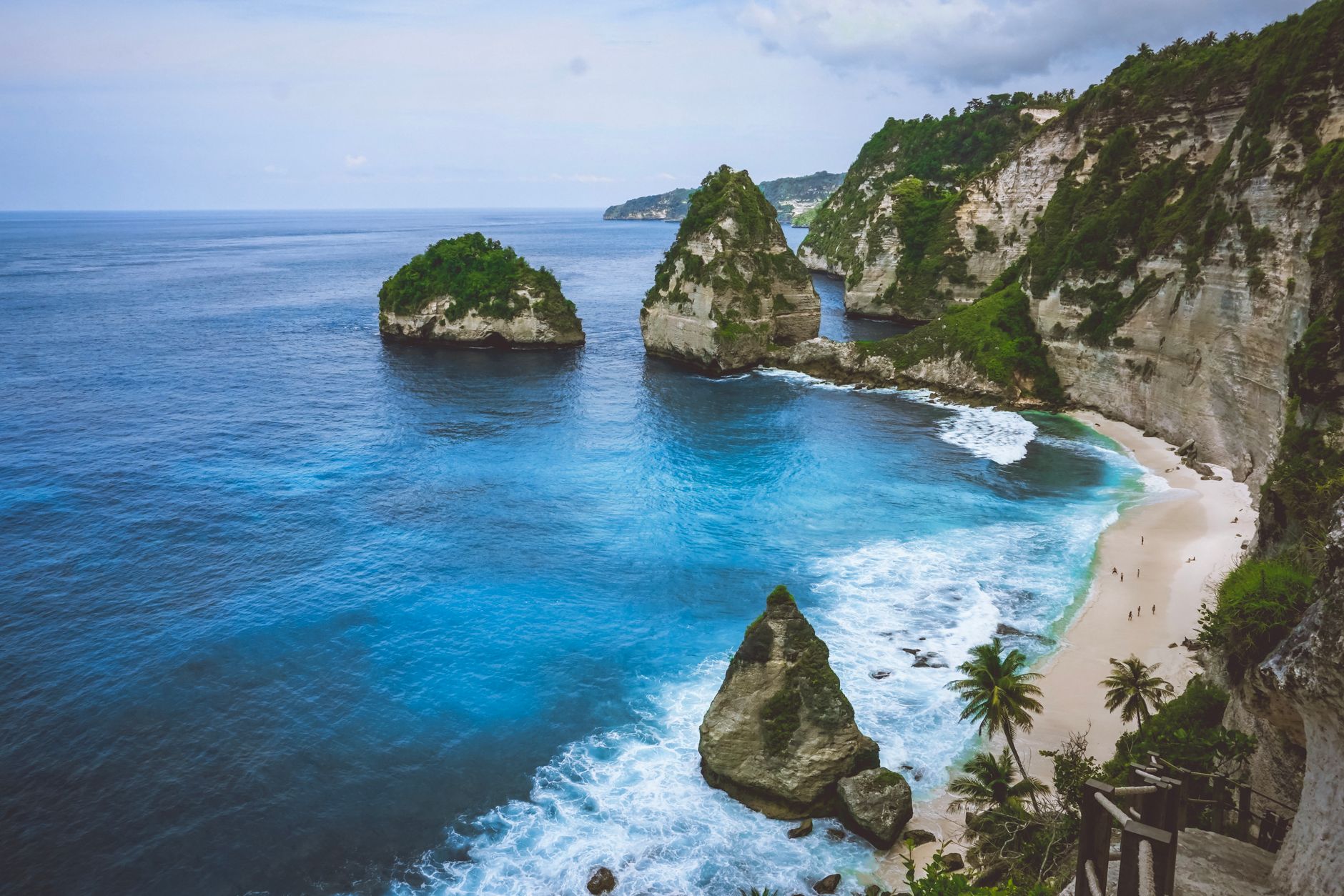
Diamond Beach (Nusa Penida)

Diamond Beach — white-sand cove and diamond-shaped rock stacks on Nusa Penida's east coast, Bali
Photo: Vladimir Konoplev on Pexels

A steep staircase and a recent series of photo platforms brought Diamond Beach into the spotlight — but early mornings keep it peaceful.

  • Travel time: Same fast-boat to Nusa Penida and then 30–50 minutes driving. Allow extra time for inland island roads.
  • Why go: The white sand bay backed by massive limestone cliffs and the famous “staircase to the sand.”
  • Practicalities: Parking and small local fees IDR 10k–20k. The staircase is steep; descend slowly.
  • Best time: Sunrise for low crowds; mid-morning for clearer water if you plan to swim.

Amed Coast (East Bali)

Amed Coast — Mount Agung rising above black-sand beaches and fishing boats on Bali's north-east shore

Amed is a long, low-key stretch of black-sand beaches and reef snorkeling sites that many nomads use as a longer-stay base.

  • Travel time: 2–3 hours from Ubud or Seminyak depending on traffic and road conditions.
  • Why go: Reliable snorkeling and diving close to shore; accommodations range from homestays to mid-range resorts with steady Wi‑Fi.
  • Practicalities: Diving/snorkel trips typically IDR 350k–700k (USD 23–45). Scooter rental IDR 60k–100k/day.
  • Best months: May–September for best underwater visibility.
  • What to wear: Reef shoes, biodegradable sunscreen and a light long-sleeve for sun protection.

Lovina (North Bali)

Lovina Beach — calm black-sand bay with traditional fishing boats and palms, north Bali

Lovina’s calm black-sand beaches and dolphin trips offer a quieter alternative to southern Bali. Mornings here are gentle and slow-paced.

  • Travel time: 2.5–4 hours from central-south Bali (traffic and mountain roads affect time).
  • Why go: Dolphin excursions depart early (around 6am) and the vibe is low-key—good for longer stays when you want predictable mornings.
  • Practicalities: Dolphin boat tours IDR 150k–300k (USD 10–20) per person. Expect basic cafés and guesthouses with reasonable prices; meals IDR 30k–80k (USD 2–6).
  • Best time: Early morning for calm seas and dolphins; avoid rough seas after heavy rain.

Gili Islands (via Padangbai)

Gili Islands — iconic beach swing and thatched umbrella, West Nusa Tenggara

While technically not Bali, the Gilis are often part of a Bali escape and offer postcard beaches, excellent snorkeling and a digital-nomad-friendly scene on Gili Trawangan.

  • Travel time: Fast boat from Padangbai 1.5–2.5 hours depending on service; express boats cost IDR 400k–700k (USD 25–45) one-way. Include transfer time from your Bali base to Padangbai (1–2 hours from Ubud/Seminyak).
  • Why go: Clear water, turtles and a slightly slower pace than southern Bali. Gili Trawangan has more nightlife; Gili Air is quieter and better for longer remote stays.
  • Practicalities: Bring cash—some islands have limited ATM access. Electricity can be less reliable on the smaller islands; pick accommodations with a generator or good reviews for Wi‑Fi.

Best Beaches for Digital Nomads

If you need beachtime with decent connectivity and cafés, these spots work best:

  • Canggu-adjacent beaches (Echo, Batu Bolong): lots of cafés and coworking spaces within minutes.
  • Seminyak beach stretch: faster access to cafés and restaurants with stable Wi‑Fi; beaches themselves are busier but convenient for quick mornings.
  • Amed: quieter coastal villages with guesthouses offering stable speeds and uninterrupted workdays.
  • Gili Air/Trawangan: pick Gili Air for fewer parties and better daytime Wi‑Fi; Gili T often has coworking pop-ups in high season.

Practical notes for the nomad:

  • Mobile data: Buy a SIM (Telkomsel or XL) for IDR 100k–300k (USD 6–20) with a 10–30GB plan—Telkomsel has the most consistent coverage across islands.
  • Coworking day rates: In Canggu and Seminyak expect IDR 100k–200k/day (USD 7–13) for a good space; many cafés allow laptop use without a fee if you buy food and drink.
  • Power: Carry a compact power bank (10–20k mAh) and a universal multi-plug; some public warungs have one socket and will expect you to buy something.

How to Reach These Beaches (transport realities)

Traffic rules and road types change how long a trip will take in Bali.

  • Scooter: The easiest and cheapest option for local beach runs. Rental IDR 60k–120k/day (USD 4–8). Always wear a helmet and ensure the rental includes some basic insurance.
  • Private driver: Expect IDR 350k–800k (USD 23–55) for half-day to full-day trips depending on distance. Drivers are invaluable for timing sunrise/sunset and parking/shop negotiation.
  • Fast boats: Sanur to Nusa Penida 30–45 minutes; Padangbai to Lombok/Gilis 1.5–2.5 hours. Book in advance on busy weekends.
  • Ferry: Larger public ferries run to Lombok and beyond but are slower and less comfortable.

Travel-time rules of thumb:

  • South Bali (Seminyak/Canggu) to Uluwatu area: 45–90 minutes depending on time of day (sunset traffic is heavy).
  • South to east coast (Amed, Bias Tugel): 2–3 hours from Seminyak.
  • North Bali (Lovina): 2.5–4 hours from Seminyak/Ubud—morning starts help avoid night driving on mountain roads.

Safety, Tides and Practical Beach Etiquette

  • Currents and reefs: Many quieter beaches have strong currents. Ask local drivers or warungs about recent conditions and avoid deep water after heavy rainfall.
  • No lifeguards: Most of these quieter Beaches lack lifeguards—swim conservatively and never alone.
  • Fees and parking: Small community entrance or parking fees are common (IDR 5k–50k). Keep small change and be ready to contribute to local maintenance.
  • Dress and temples: If a beach walk passes a local temple, wear a sarong and sash if entering temple grounds—many temples expect modest attire. Sarongs are cheap locally (IDR 40k–150k, USD 3–10).
  • Waste: Carry a small bag for rubbish—Bali has struggled with plastic; taking your trash back to your accommodation is a good habit.

Working by the Beach: Wi‑Fi, Power and Best Practices

  • Test speeds: Mobile data can be a reliable fallback; do a quick speed-check before an important call.
  • Choose shade: Bring a lightweight umbrella or reserve a shaded seat in a café—power outlets are limited at warungs.
  • Time your heavy tasks: Plan big uploads or long calls for early morning or late afternoon when cafés are quieter and power is steadier.

Where to Stay Nearby (realistic options)

Rather than name specific hotels, choose neighbourhoods:

  • South Bali: Stay in Uluwatu, Jimbaran or Pecatu for quick access to Uluwatu/Green Bowl/Nyang Nyang.
  • East Bali: Book in Amed or Candidasa to access Bias Tugel and other east-coast beaches.
  • Nusa Penida: Stay on Nusa Penida itself for early access to Atuh/Diamond; choose a guesthouse close to Toya Pakeh or Sampalan for easier fast-boat transfers.
  • North Bali: Book a guesthouse in Lovina for dolphin mornings and calmer nights.

Expect nightly rates: budget homestays IDR 150k–350k/night (USD 10–25); mid-range bungalows near beaches IDR 400k–1M/night (USD 27–67).

Responsible Beach Use and Local Culture

  • Respect offerings: You’ll see small coconut-leaf shrine offerings along paths. Don’t step on them and avoid moving them for photos.
  • Support locals: Eat at the warung, buy a coconut or coffee and pay the small access fees—communities maintain paths and stairs with these funds.
  • Noise: Keep loud music down; many of these Beaches are used by fishing families.

Practical tips

  • Best months: April–October (dry season) for calm seas and easy road travel. Shoulder months April, May and September combine fewer crowds and good weather.
  • Best times of day: Early morning (6–9am) for swimming and remote work productivity; late afternoon (4–6pm) for photography and light evening breezes.
  • Currency and ATMs: Bring cash for remote beaches—some locations have no ATMs. Small towns have ATM services but expect withdrawal limits.
  • What to pack: reef shoes, biodegradable sunscreen, light rain shell (for sudden showers), a compact power bank, universal plug and a sarong for temple visits.
  • Health: Local warungs sell bottled water; consider carrying oral rehydration salts for long beach days. Tetanus shot up to date is recommended for remote travel in remote areas.

These Beaches are among the places I send friends and colleagues who ask for quiet sand plus real local life. They work especially well when you plan logistics ahead — driver bookings, fast-boat slots and a back-up mobile data plan will keep your remote-work days on the beach smooth.

If you want a downloadable one-day itinerary that links a morning surf, a mid-day café with Wi‑Fi and an afternoon cliff viewpoint, I can put one together based on where you’re staying.

Frequently Asked Questions

Are these quieter beaches safe for swimming?

Many quieter beaches have no lifeguard and variable currents—check local conditions at warungs, swim near rocks only when calm, and avoid swimming alone after heavy rain.

What’s the best season to visit Bali’s beaches for clear water?

The dry season, April–October, generally offers the clearest seas and best snorkeling visibility.

How much should I budget for a private driver for a beach day?

Expect about IDR 350k–800k (USD 23–55) for a half- to full-day driver depending on distance.

Can I find reliable Wi‑Fi at these beaches for remote work?

Cafés near popular beaches (Canggu, Seminyak, parts of Amed and Gili Air) usually have reliable Wi‑Fi, but carry a Telkomsel SIM as backup for calls and uploads.

How do I get to Nusa Penida from Bali?

Fast boats run from Sanur and take about 30–45 minutes; fares are typically IDR 300k–400k one-way (USD 20–27).

Should I rent a scooter or hire a driver?

Scooters (IDR 60k–120k/day) are flexible for short trips, but hire a driver for long distances, tricky cliff roads or island transfers to avoid night driving.

Are there entrance fees for these beaches?

Most quieter beaches ask a small parking or access fee of IDR 5k–50k to support local maintenance.