The Ultimate Bali Food Guide 2026: Traditional Balinese Dishes, Street Food & Where to Eat
By VisitBali.com Editorial Team · 12 min read · Published 29 July 2026 · Last updated 15 September 2026
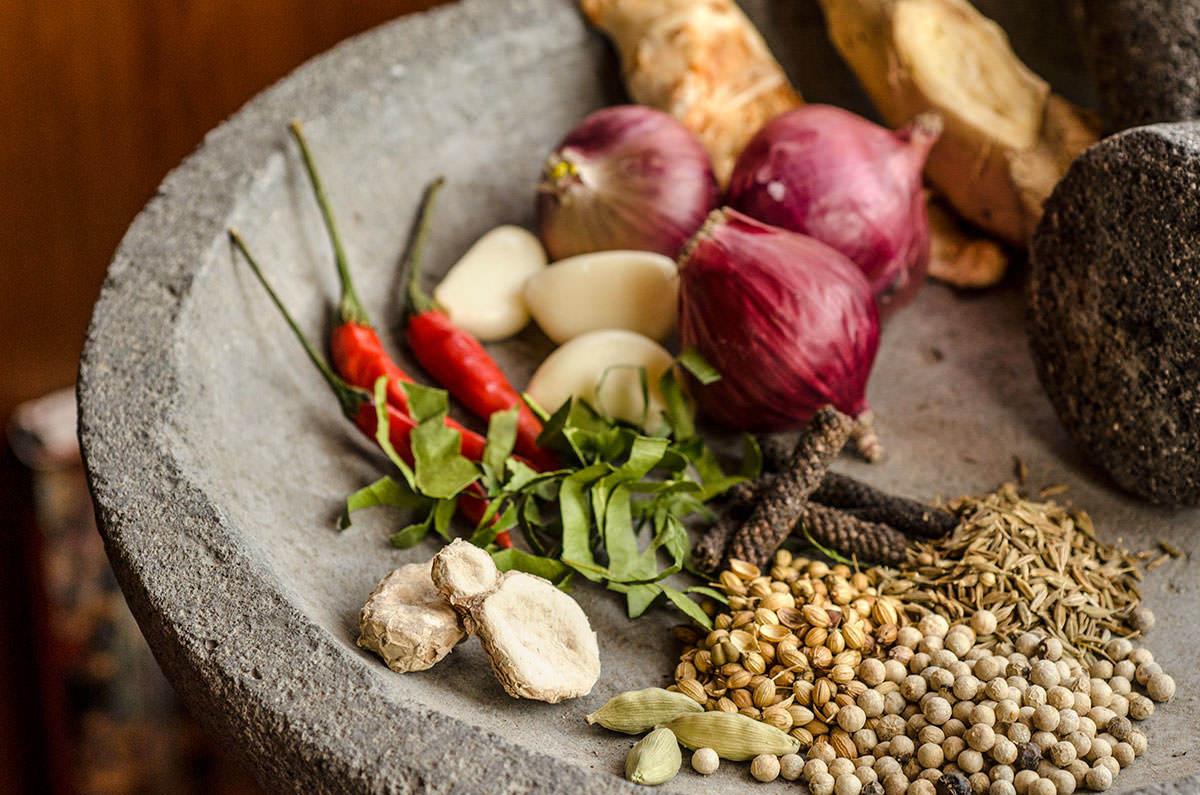

Bali's food culture is one of the richest and most layered in Southeast Asia.
There are places you visit and places that feed you — and Bali manages to be both in the most extraordinary way. Long before the island became famous for its beach clubs and yoga retreats, Balinese families were gathering around shared plates of slow-roasted duck, hand-ground spice pastes, and fragrant rice steamed inside banana leaves. That tradition is still very much alive today. Eat at the right places and you'll find flavours so complex, so deeply considered, they rival anything on the global fine-dining circuit.
This guide covers everything: the essential dishes you cannot leave without trying, the street food that's best eaten standing up at midnight, the seafood grills that justify a taxi ride to Jimbaran, and the café-filled neighbourhoods where world-class coffee meets volcanic-soil produce. Read it before you go, bookmark it while you're there, and prepare to eat very, very well.
Download a translation app before you travel. Many of the best warungs (family-run eateries) display handwritten menus in Bahasa Indonesia only — half the adventure is pointing at whatever looks good.
Why Balinese Food Is Unlike Anything Else in Indonesia
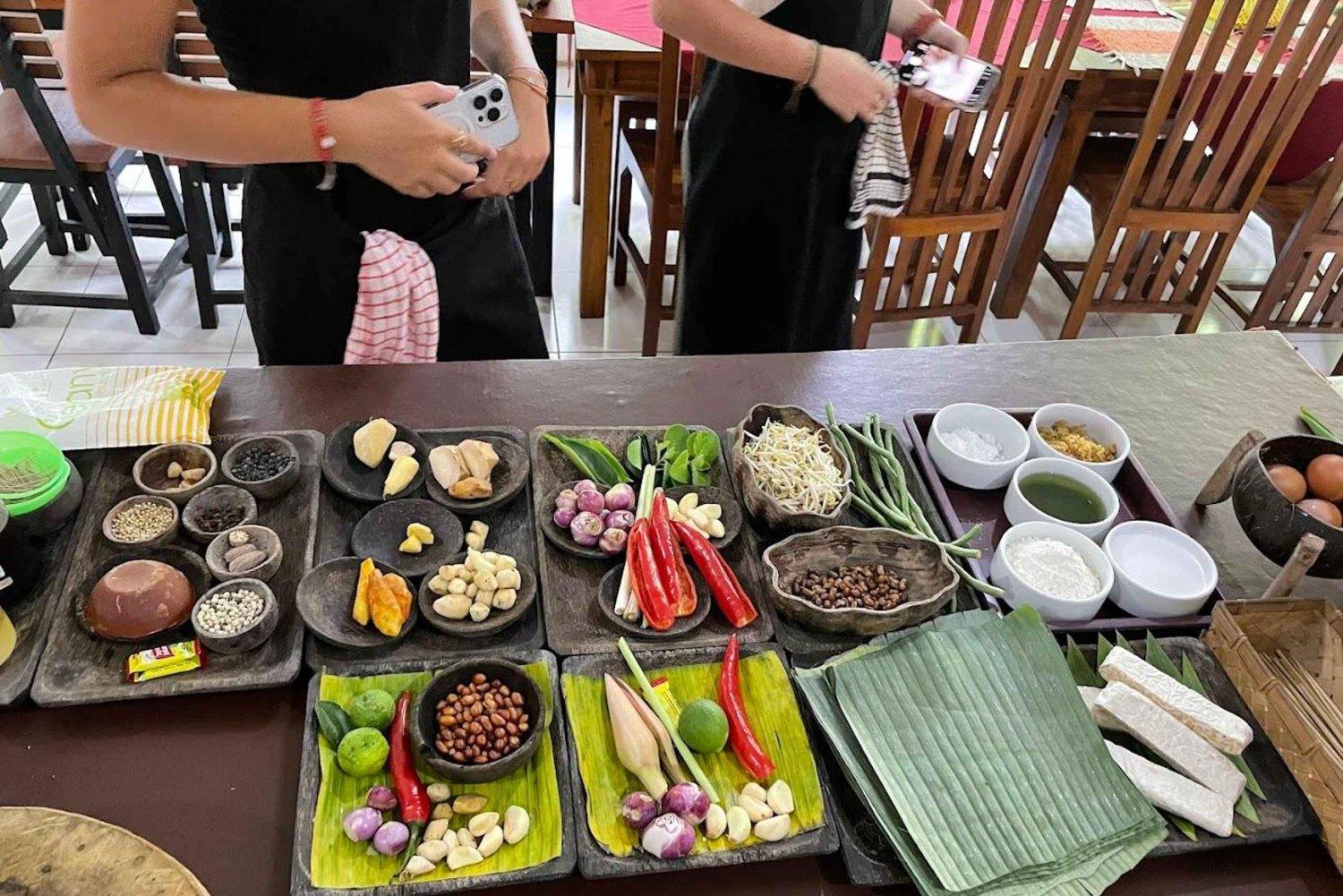
Traditional cooking in Bali begins with hand-ground spice pastes — a ritual as much as a recipe.
Indonesia spans over 17,000 islands, each with its own culinary dialect. Yet Balinese cuisine stands apart even within this extraordinary diversity. The reason is threefold: religion, ritual, and the island's volcanic soil.
Unlike the rest of Indonesia — which is predominantly Muslim — Bali practices a Hindu-animist tradition called Agama Hindu Dharma. Pork, absent from most Indonesian kitchens, is central here. Ceremonial feasts are woven into the annual calendar, meaning many dishes were originally perfected not for restaurants but for temple offerings. That spiritual foundation gives Balinese cooking a depth and intentionality that's rare anywhere in the world.
Add to that the island's geography. Bali's volcanic soils produce extraordinary ingredients: shallots, galangal, turmeric, long peppers, and candlenuts grown at altitude, each carrying more intensity than their lowland equivalents. The cooking absorbs those ingredients and amplifies them through slow roasting, charcoal grilling, and banana-leaf steaming techniques that have barely changed in centuries.
Balinese cuisine uses very little dairy and almost no wheat. Most dishes are naturally gluten-free and built around rice, fresh vegetables, coconut milk, and hand-ground spice pastes.
Base Genep: The Spice Foundation of Balinese Cooking
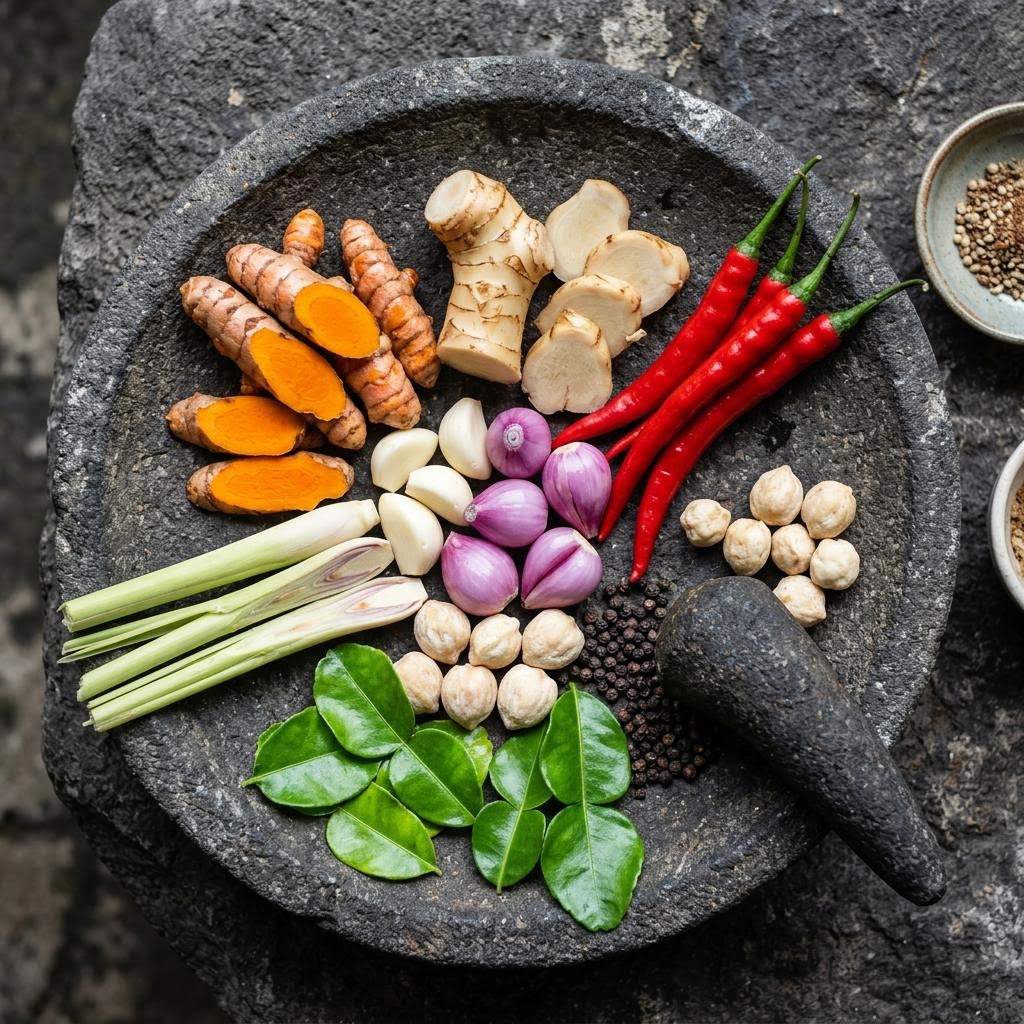
Base genep — the "complete spice paste" — is the aromatic backbone of Balinese cuisine.
If Balinese food had a heartbeat, it would be base genep (pronounced "bah-say gen-ep"). Translated loosely as "complete spice paste," it's a wet grind of up to twenty ingredients including shallots, garlic, ginger, galangal, turmeric, lemongrass, lesser galangal (kencur), candlenuts, black and white pepper, chillies, dried shrimp paste (terasi), and palm sugar. Every cook has their own ratio, and many families guard their version like a family heirloom.
Base genep is the starting point for almost every significant Balinese dish. It's fried in coconut oil until fragrant, then used to marinate meats, flavour soups, or stuff whole birds before slow cooking. Understanding it is the key to understanding why Balinese food tastes the way it does — layered, complex, faintly smoky, and deeply aromatic.
If you take a Balinese cooking class — and you absolutely should — make base genep from scratch using a stone mortar. The hand-grinding releases oils that a blender simply cannot replicate.
Traditional Balinese Dishes
Babi Guling — Balinese Spit-Roasted Pork
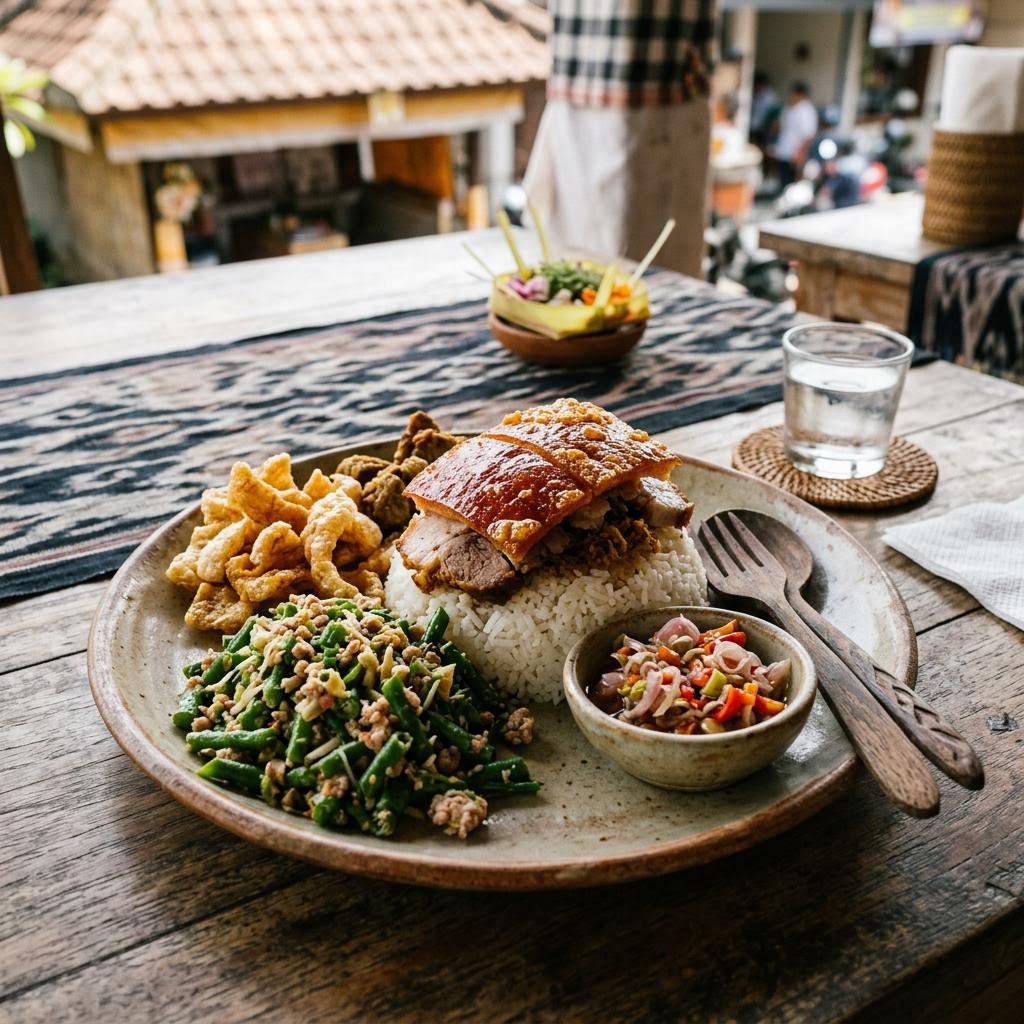
Babi Guling — spit-roasted pork stuffed with base genep — is Bali's most celebrated dish.
🌶🌶
❌ No
IDR 45,000–85,000
Ubud, Denpasar
⭐⭐⭐ (to make)
8–12 hours
~650 kcal per serving
A whole suckling pig, stuffed with base genep, cassava leaves, and spiced coconut, slow-roasted over a charcoal spit for the better part of a day — babi guling is Bali's most iconic dish and the one most travellers make a pilgrimage to eat. The skin shatters like thin glass. The meat beneath is soft, fragrant, and slightly sweet from the palm sugar in the spice paste. It's served with steamed rice, lawar, and a small bowl of braised offal for the adventurous.
Originally a ceremonial dish reserved for temple festivals and life-cycle rituals, babi guling became widely available in dedicated warungs as tourism grew. The finest versions are still made by families who have been roasting pigs the same way for generations.
Where to try: Ibu Oka in Ubud is the most famous babi guling warung in Bali — arrive before noon or risk missing out. For something less touristy, ask your guesthouse to recommend a local warung babi guling in Denpasar or Gianyar.
Ayam Betutu — Slow-Roasted Sacred Chicken
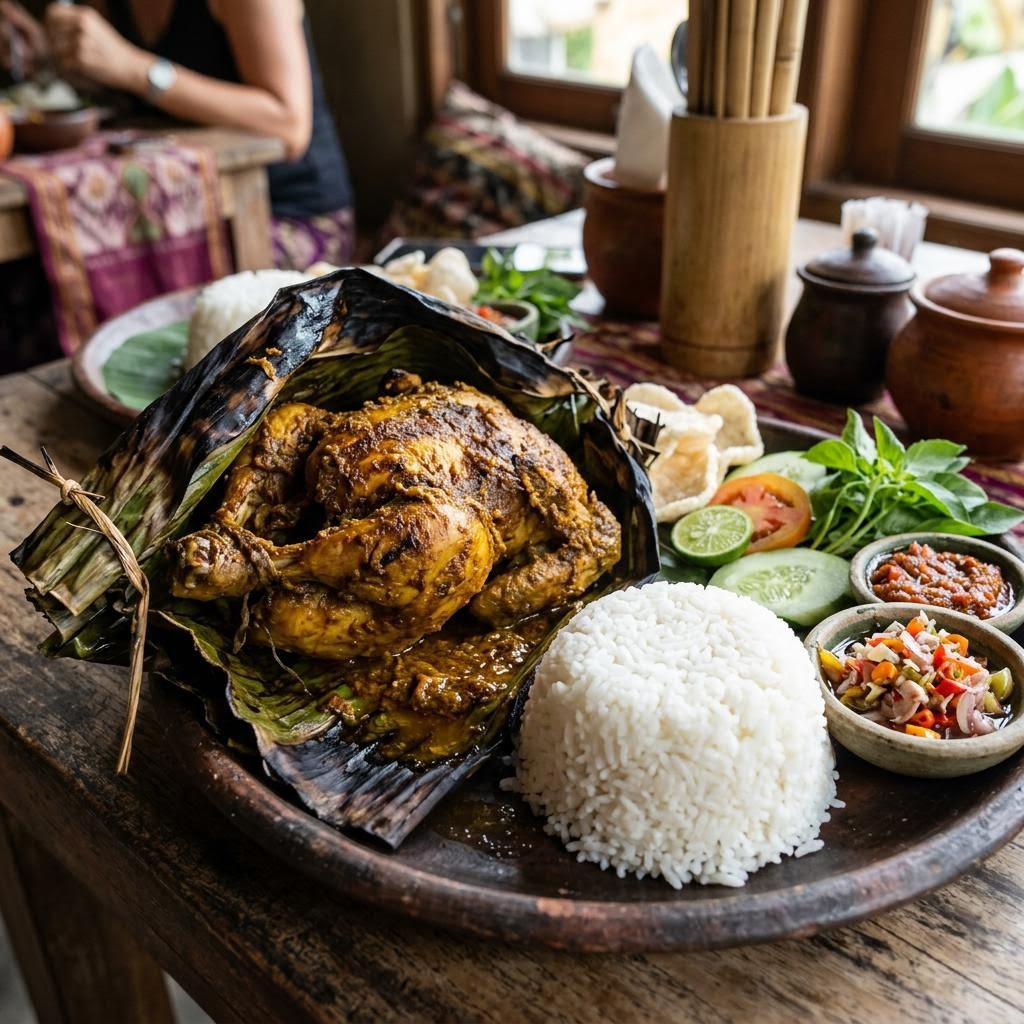
Ayam Betutu is stuffed with spices and slow-cooked in banana leaves — a dish that requires patience and rewards it.
🌶🌶🌶
❌ No
IDR 65,000–150,000
Ubud, Gilimanuk
⭐⭐⭐⭐
12–24 hours
~480 kcal per serving
Betutu is the cooking method as much as the dish — it refers to the process of stuffing a whole bird with base genep, wrapping it tightly in banana leaves and coconut husks, then burying it in smouldering embers or slow-cooking it in a sealed clay pot for up to 24 hours. The result is chicken of breathtaking tenderness, permeated through to the bone with the deep, earthy heat of the spice paste.
Ayam betutu is seriously spicy by Balinese standards. It's not a dish for chilli-phobics, but it's one that rewards the brave with complexity that builds on the palate long after the last bite.
Where to try: Gilimanuk, Bali's westernmost town, is the traditional home of the best betutu. For convenience, Ubud has several dedicated betutu restaurants that do the dish justice.
Bebek Betutu — Smoked Duck
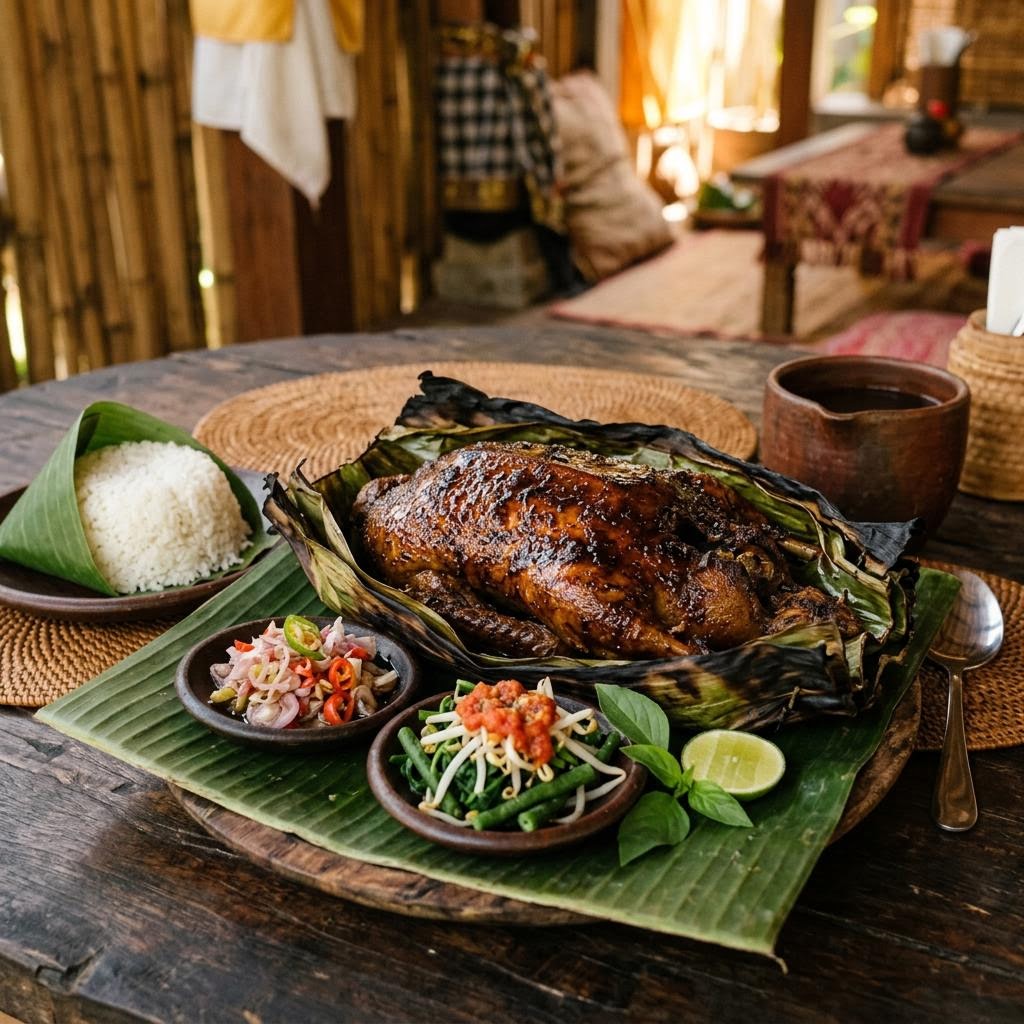
Bebek Betutu — smoked duck with Balinese spices — is richer and more complex than the chicken version.
🌶🌶🌶
❌ No
IDR 120,000–250,000
Ubud, Seminyak
⭐⭐⭐⭐⭐
18–24 hours
~600 kcal per serving
The duck version of betutu is richer, more deeply flavoured, and generally considered the finer dish. Free-range Balinese ducks — leaner and more gamey than their Western counterparts — absorb the spice paste in a way that chicken cannot quite match. The skin, where it escapes the banana-leaf wrapping, takes on a lacquered, almost caramelised quality.
Expect to pay more for bebek betutu — it requires more preparation, more fuel, and a better quality bird. Treat it as a special-occasion meal and order it the day before if possible, since many restaurants prepare it to order.
Lawar — Ceremonial Minced Meat Salad
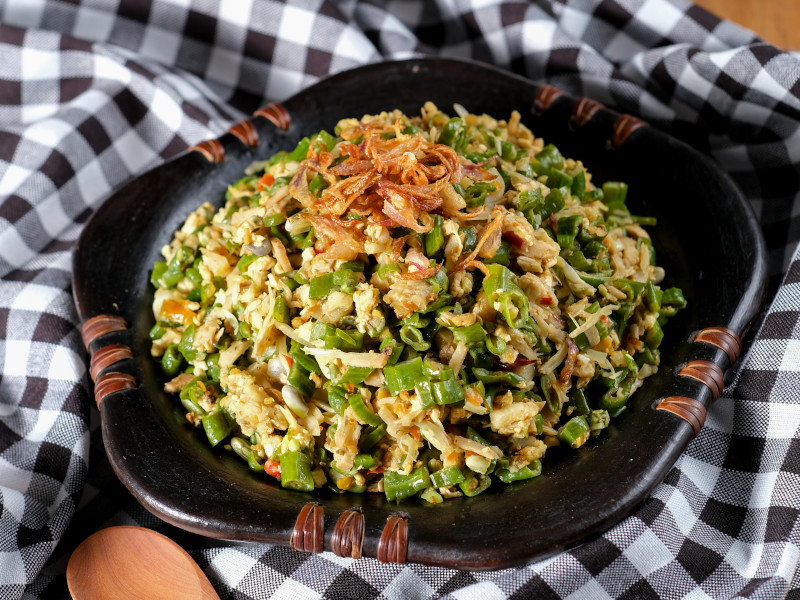
Lawar is one of Bali's most important ceremonial dishes — complex, deeply spiced, and unlike anything else.
🌶🌶
✅ White lawar
IDR 25,000–55,000
Island-wide
⭐⭐⭐
1–2 hours
~280 kcal per serving
Lawar is a salad in the loosest sense — finely chopped meat (usually pork or young jackfruit), long beans, grated coconut, and a fierce spice mix that includes raw shallots, garlic, galangal, and chilli. Traditional lawar merah ("red lawar") includes fresh pork blood mixed in while the meat is still warm, giving it an intensely savoury depth that's hard to describe but impossible to forget.
The vegetarian version — lawar putih or "white lawar" made with jackfruit — is more widely available and still exceptionally good. Both versions are usually eaten as part of a larger meal alongside rice and other dishes.
Vegetarian option: Ask specifically for lawar nangka (jackfruit lawar) or lawar putih to guarantee a meat-free version.
Sate Lilit — Minced Fish Satay on Lemongrass Skewers
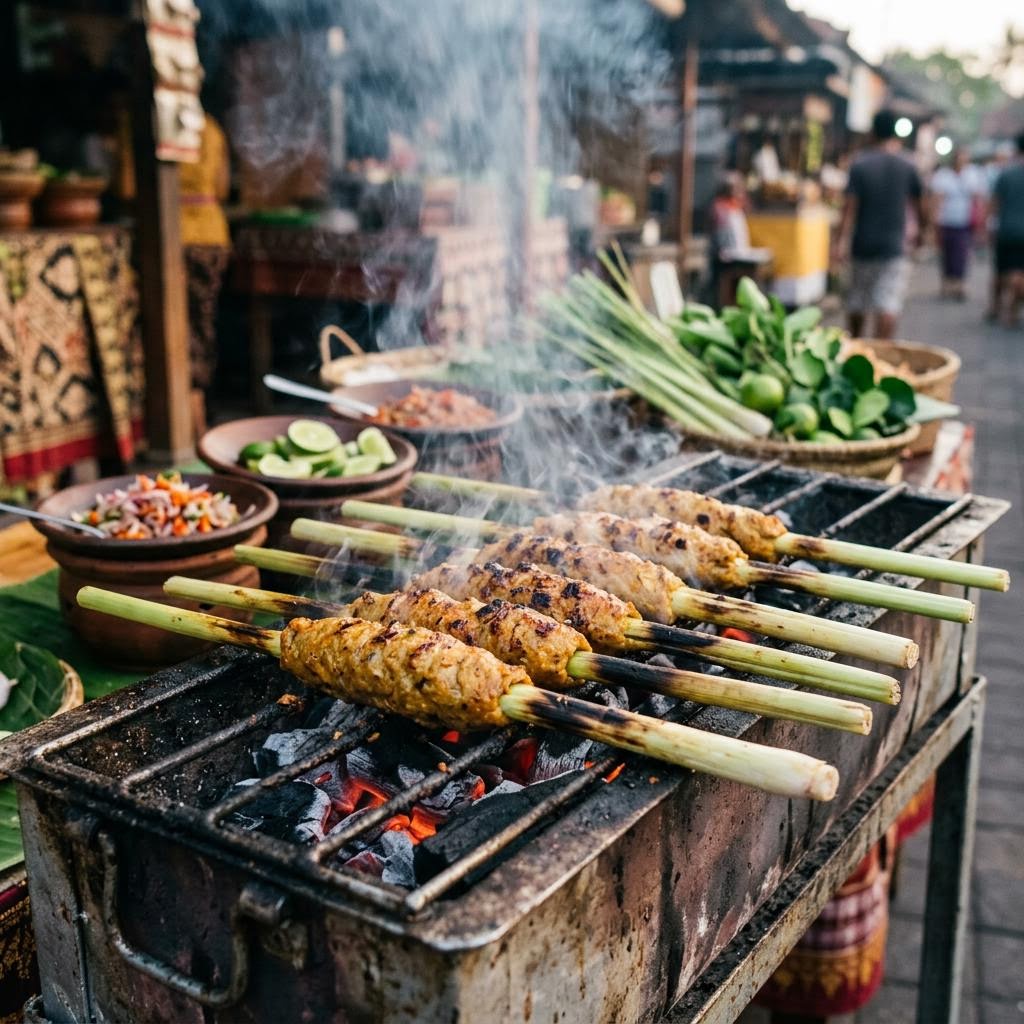
Sate Lilit is distinctively Balinese — minced seafood mixed with spices and wrapped around lemongrass skewers.
🌶🌶
❌ No (usually)
IDR 30,000–60,000
Coastal areas, Ubud
⭐⭐
30 minutes
~350 kcal per serving
Unlike the bamboo-skewered satay you'll find across Indonesia, Bali's sate lilit is made by pressing a mixture of minced fish (usually mackerel or tuna), coconut, lime leaves, and base genep around a lemongrass stalk. The lemongrass perfumes the meat from the inside as it grills over charcoal, creating a satay that's aromatic, slightly sweet, and beautifully moist.
Sate lilit is often served at Balinese ceremonies in enormous quantities — seeing hundreds lined up over glowing embers at a temple festival is one of Bali's great culinary sights. For travellers, it turns up as a street snack, a restaurant starter, and a component of nasi campur platters.
Nasi Campur — Bali's National Plate
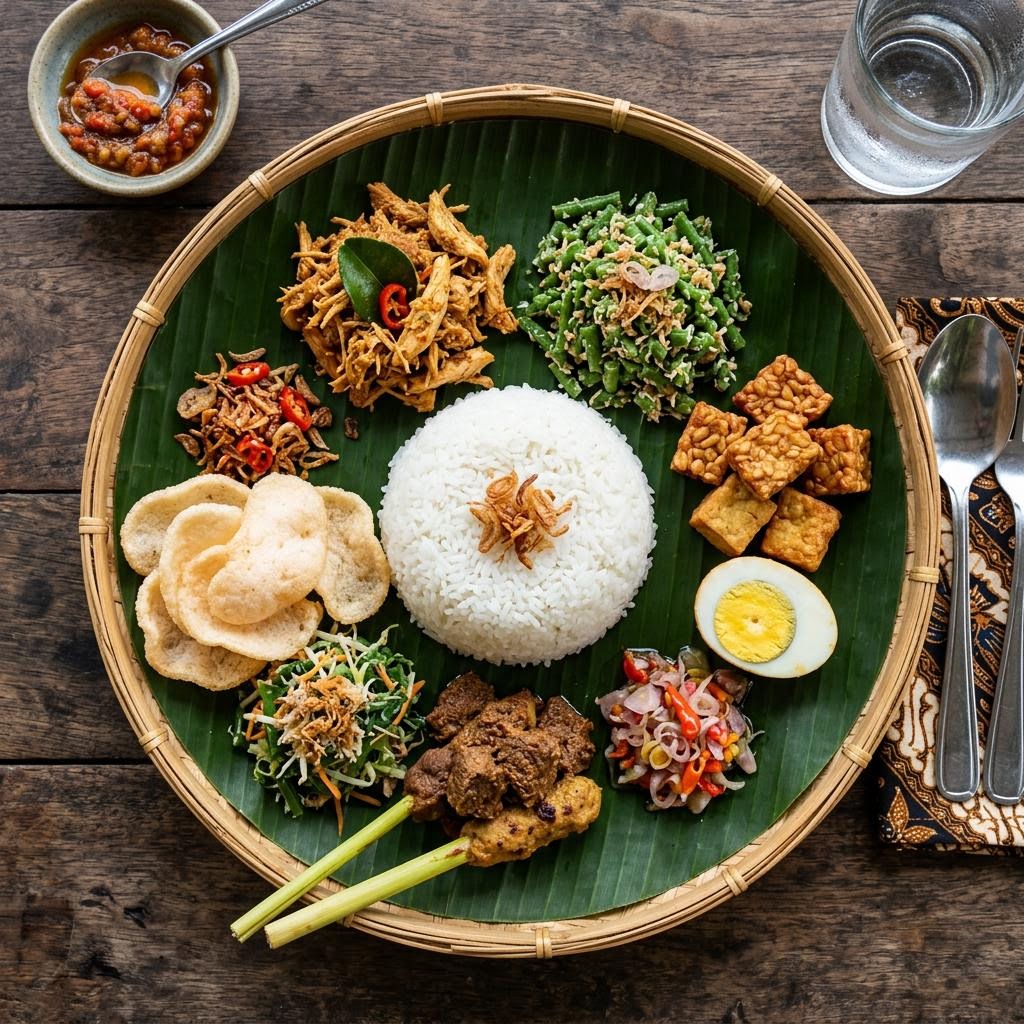
Nasi Campur — "mixed rice" — is the most versatile meal in Bali and a perfect introduction to local flavours.
🌶 Varies
✅ Often available
IDR 20,000–60,000
Island-wide
⭐
N/A (ready-made)
~580 kcal per serving
Nasi campur translates as "mixed rice" and it's exactly that: a mound of steamed rice surrounded by small portions of whatever the warung is cooking that day. It might include a sliver of grilled fish, a spoonful of lawar, a wedge of boiled egg, some spiced shredded chicken, a few crackers, and a puddle of sambal. Every warung does it differently. That variability is the whole point.
If you eat only one meal at a warung during your trip, make it a nasi campur. It's cheap, wildly flavourful, and gives you a panoramic survey of the kitchen's capabilities in a single plate. Locals eat it for breakfast, lunch, and dinner without apology.
Pepes Ikan — Fish Steamed in Banana Leaves
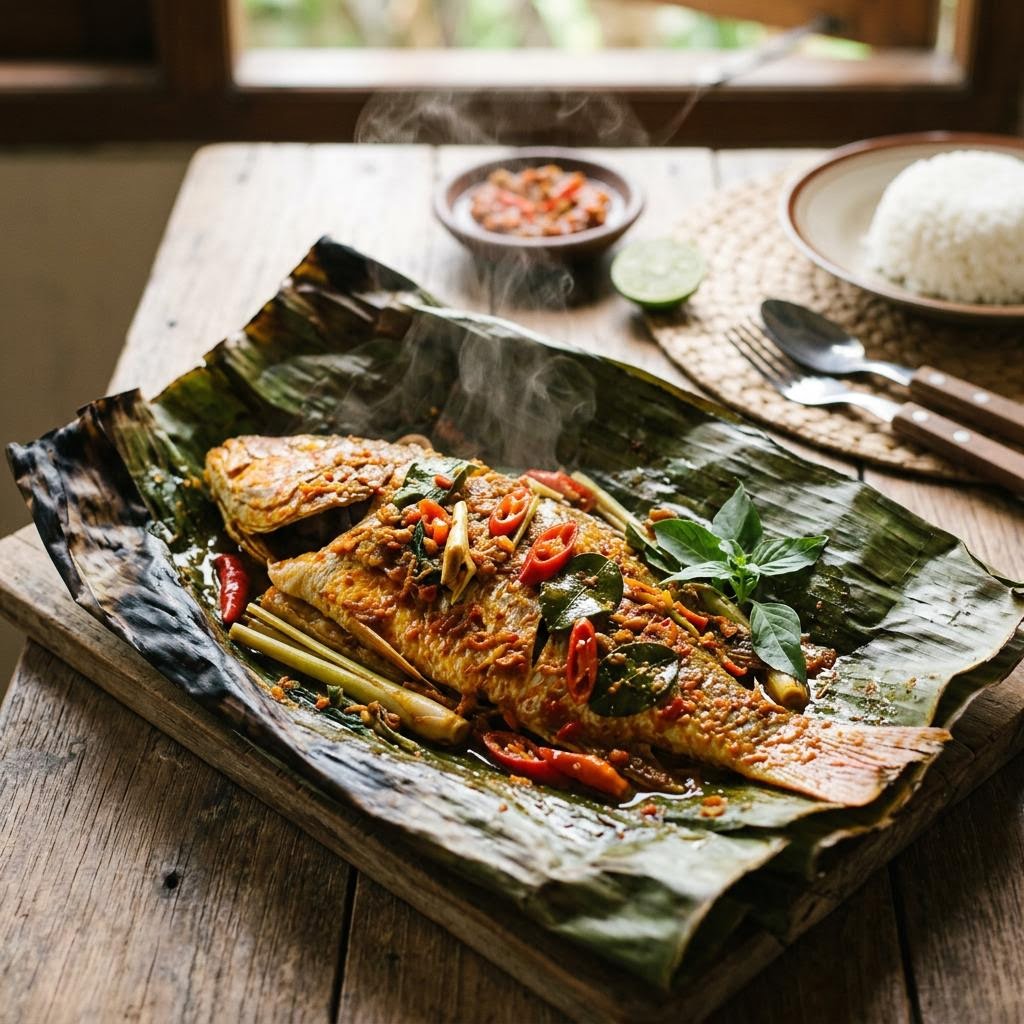
Pepes Ikan — fish parcels steamed in banana leaves — lock in spices and moisture beautifully.
🌶🌶
✅ Fish / No meat
IDR 30,000–65,000
Bali-wide
⭐⭐⭐ (to make)
45 min
~270 kcal per serving
A whole fish — or fish fillet — marinated in base genep, wrapped tightly in banana leaves, and steamed or grilled until the leaves char slightly and perfume the flesh inside. Unwrapping a pepes ikan parcel at the table is one of those minor theatrical moments that makes eating in Bali feel special. The fish is impossibly moist, deeply spiced, and carries a faint herbal note from the leaf itself.
Where to try: Almost any traditional warung will have pepes ikan on the menu. Look for the version that includes whole lime leaves and sliced chilli tucked inside the parcel.
Tum Ayam — Steamed Chicken in Banana Leaves
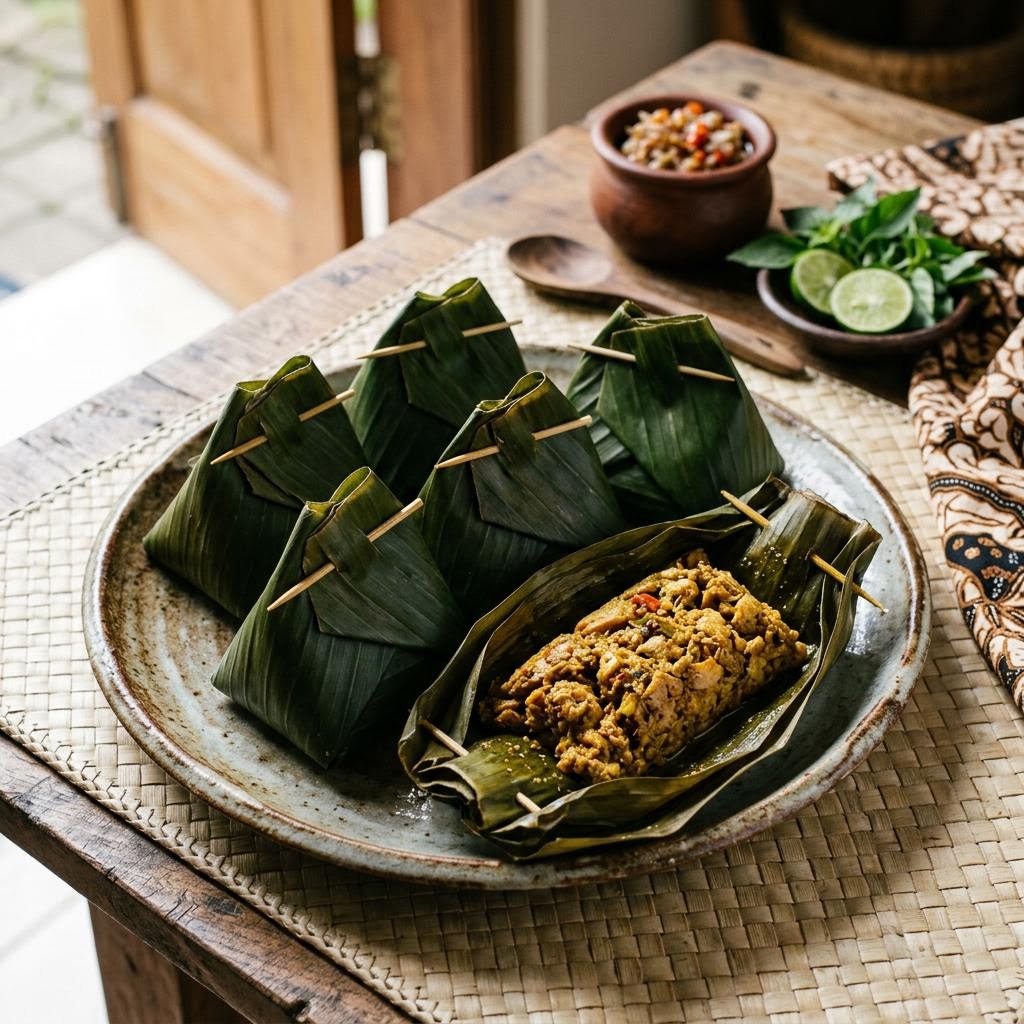
Tum Ayam is one of Bali's most underrated dishes — bite-sized parcels of intensely spiced steamed chicken.
🌶🌶
❌ No
IDR 25,000–50,000
Bali-wide
⭐⭐⭐ (to make)
1 hour
~350 kcal per serving
Tum is the smaller sibling of pepes — bite-sized parcels of minced or shredded chicken mixed with base genep, grated coconut, and lime leaves, steamed until just set. They're served as finger food at ceremonies and as a side dish in warung meals. The flavour is concentrated, warming, and moreish — the kind of thing you keep reaching for without quite knowing why.
Tipat Cantok — Balinese Rice Cake Salad
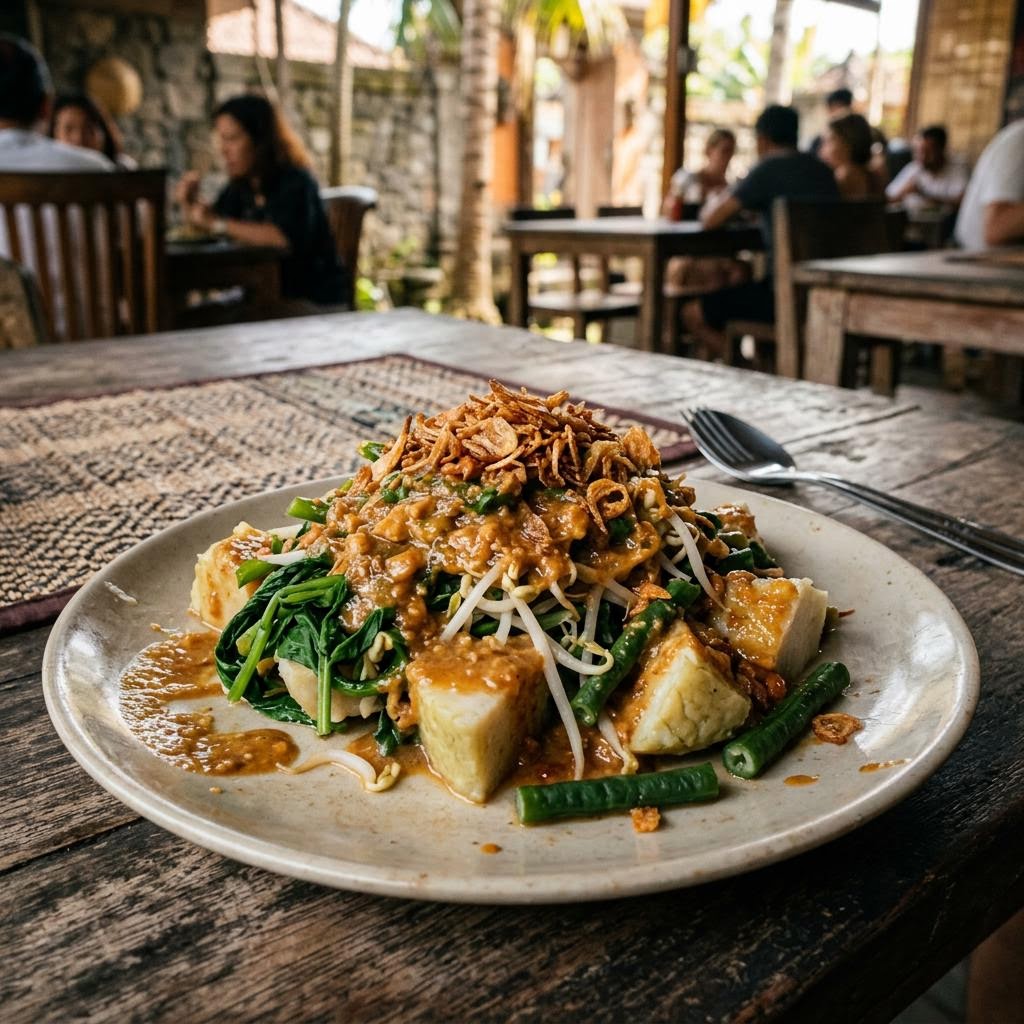
Tipat Cantok — Bali's answer to gado-gado — is a favourite breakfast and lunch dish.
🌶
✅ Yes
IDR 10,000–25,000
Denpasar, Ubud
⭐⭐
20 minutes
~320 kcal per serving
Tipat cantok is Bali's answer to gado-gado — compressed rice cakes (tipat), water spinach, bean sprouts, and long beans tossed in a spiced peanut sauce with kencur (lesser galangal) giving it a distinctively Balinese twist. It's one of the island's great vegetarian dishes, popular at morning markets and humble roadside stalls. Satisfying, affordable, and completely plant-based.
Jukut Ares — Banana Trunk Soup
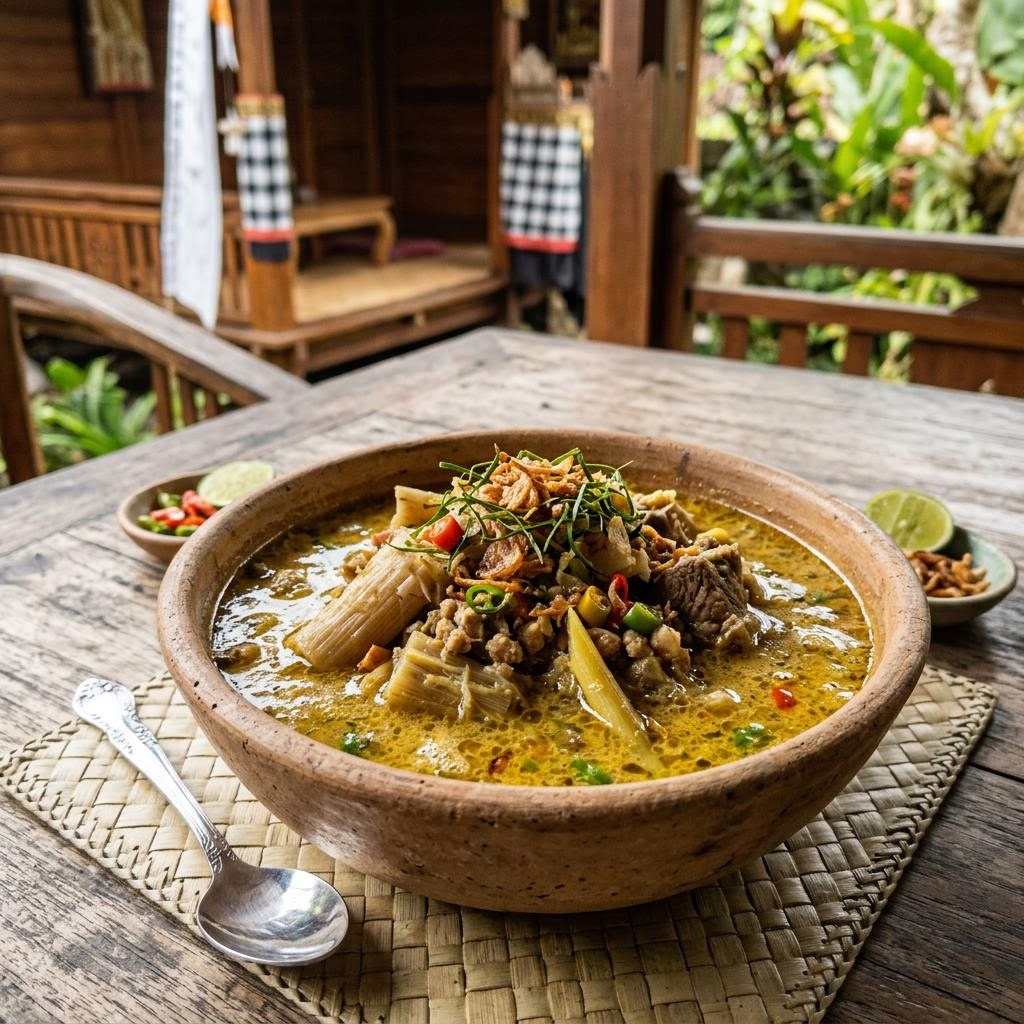
Jukut Ares — banana trunk soup — is a deeply traditional dish rarely found outside of ceremonies.
🌶
✅ Jackfruit version
IDR 20,000–45,000
North & Central Bali
⭐⭐⭐ (to make)
2 hours
~220 kcal per serving
Perhaps the most unusual dish on this list, jukut ares is a soup made from the tender inner shoot of a banana trunk, cooked with pork or duck bones, coconut milk, and base genep. The banana trunk has the texture of a firm, slightly fibrous artichoke heart and absorbs the fragrant broth beautifully. It's a ceremonial dish, most commonly eaten at tooth-filing ceremonies and major temple festivals, but some traditional restaurants in Ubud and Denpasar serve it year-round.
If you're offered jukut ares at a Balinese ceremony, accept without hesitation. It's one of those dishes that simply doesn't exist in restaurant form and tasting it is a genuine privilege.
Bali Street Food Guide
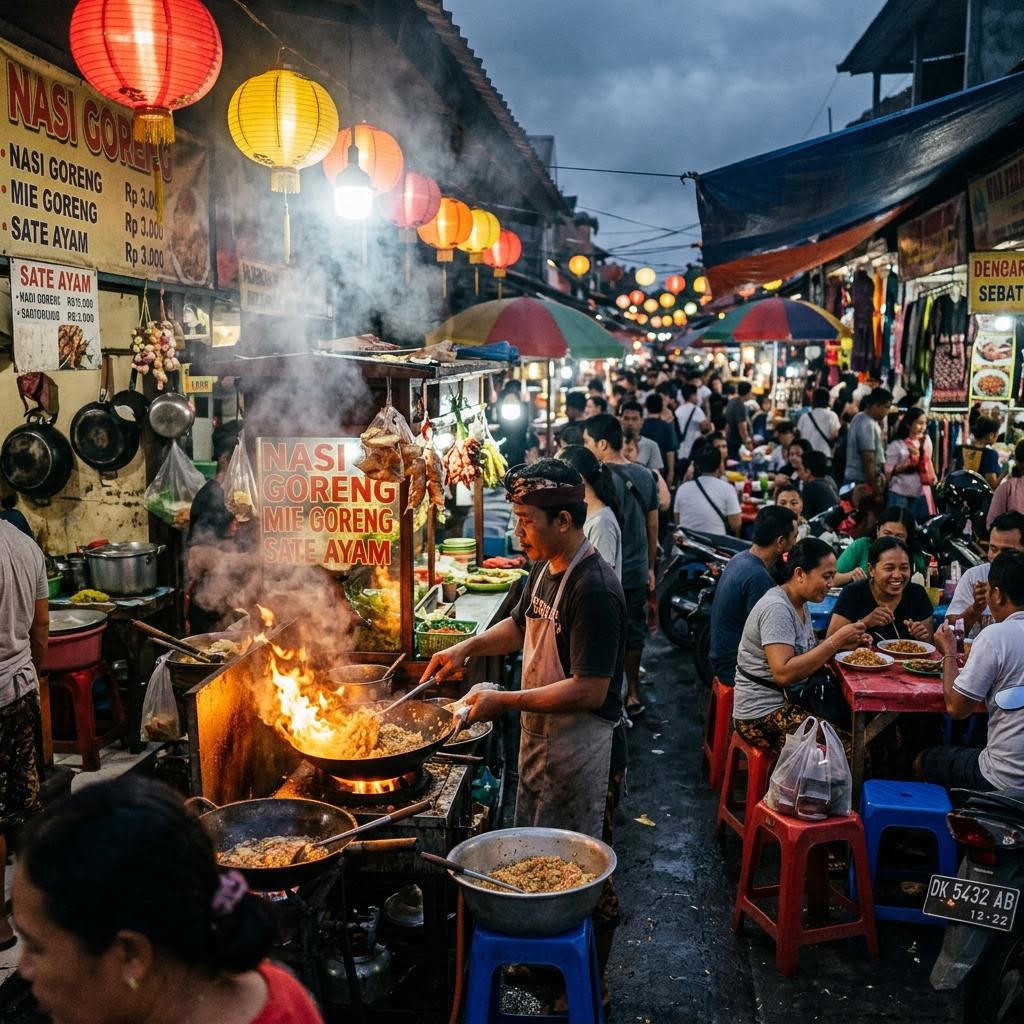
Bali's night markets and street food stalls are some of the best — and most affordable — eating on the island.
Some of the best eating in Bali happens on plastic stools at roadside stalls, elbow-to-elbow with locals. Street food here is not a tourist concept — it's how most Balinese actually eat, and the quality is often sensational.
Nasi Goreng — Indonesian Fried Rice
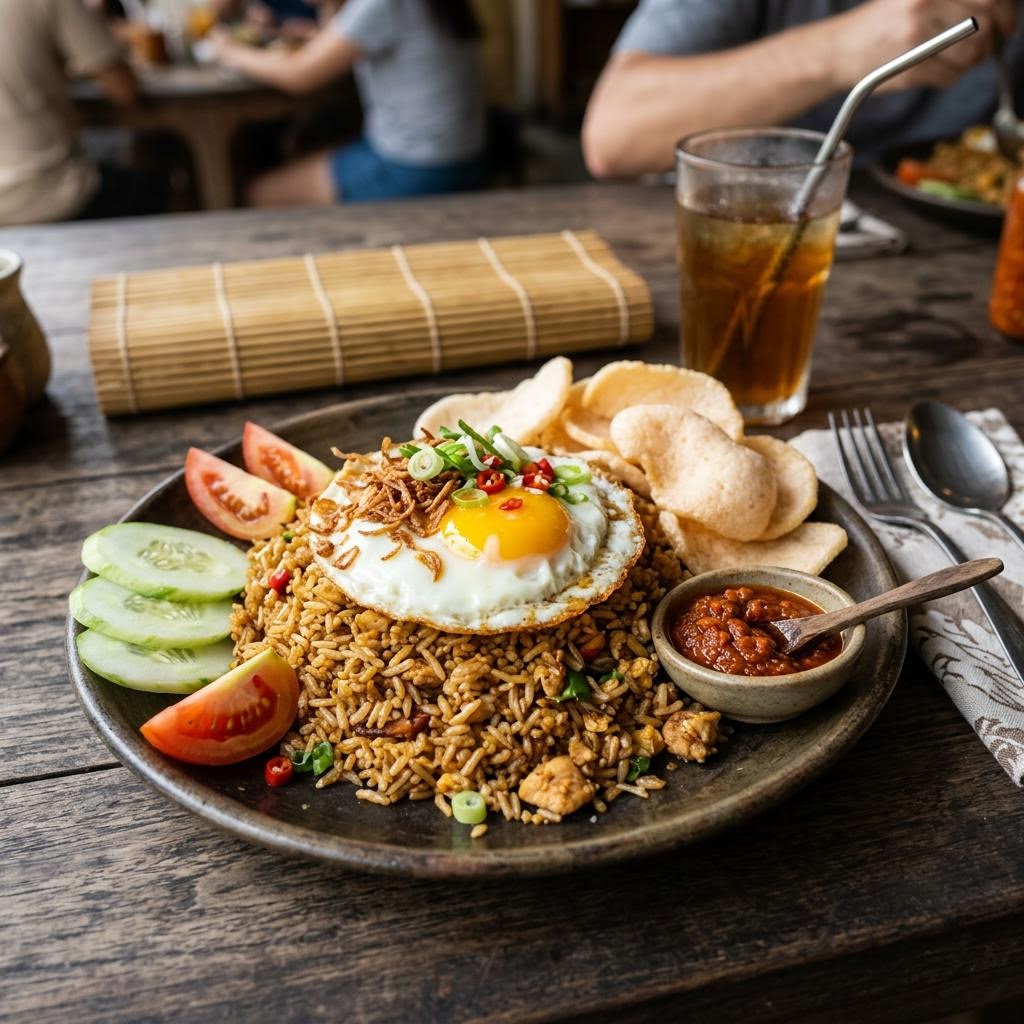
Nasi Goreng — Indonesia's most famous dish — is best eaten from a roadside wok at 11pm.
🌶
✅ Vegetable version
IDR 20,000–60,000
Island-wide
⭐⭐ (to make)
15 min
~520 kcal per serving
Indonesia's most famous export. Leftover rice stir-fried over high heat with shallots, garlic, sweet soy sauce (kecap manis), chilli, and whatever protein is available, topped with a fried egg and a scattering of crackers. At its best, it has a faint smokiness — the "breath of the wok" — that makes it entirely irresistible at midnight.
Price guide: IDR 15,000–35,000 at a warung; IDR 60,000–150,000 at a restaurant.
Mie Goreng — Fried Noodles
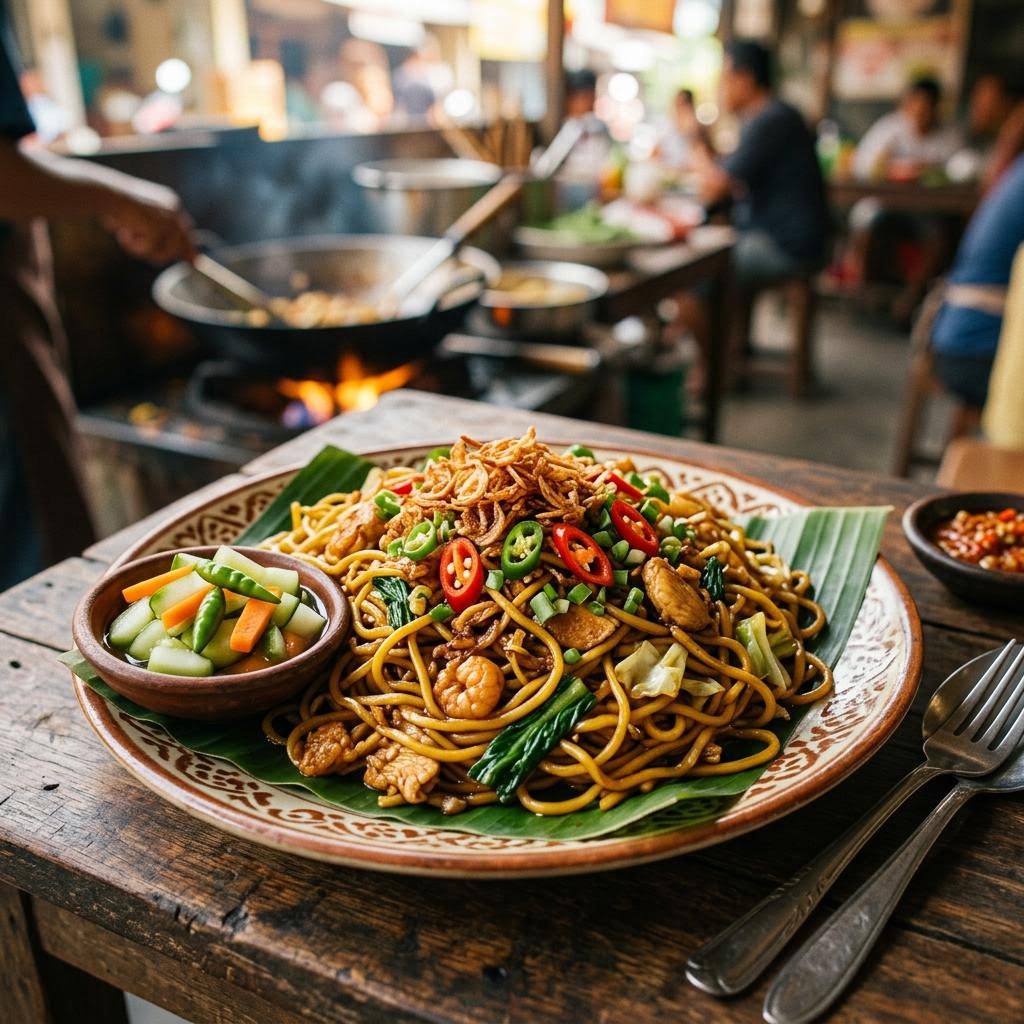
Mie Goreng — fried egg noodles — is a comforting staple across Bali.
🌶
✅ Vegetable version
IDR 18,000–55,000
Island-wide
⭐⭐ (to make)
15 min
~460 kcal per serving
The noodle twin of nasi goreng. Egg noodles stir-fried with the same aromatics and usually finished with a fried egg and pickled cucumber on the side. Cooked well almost everywhere and makes an excellent late-night fallback.
Bakso — Meatball Soup
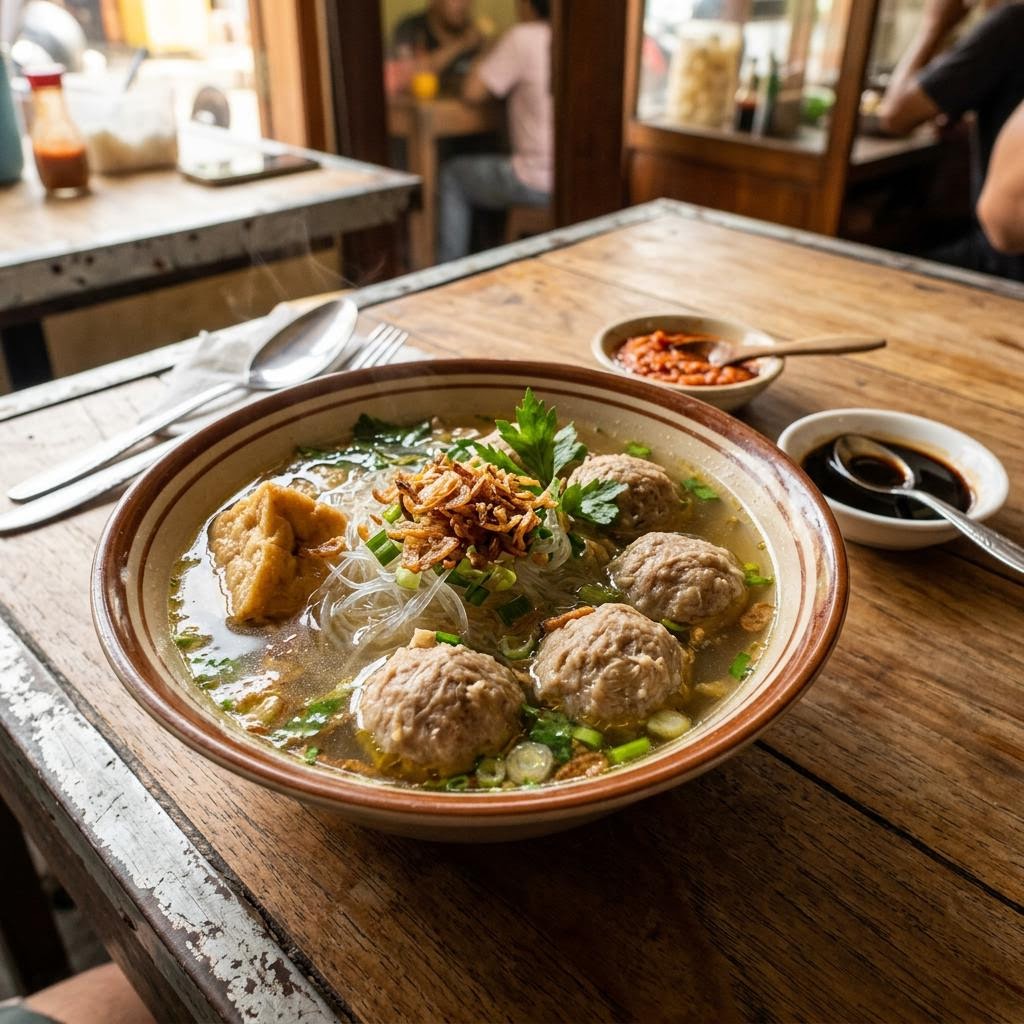
Bakso — bouncy meatball soup — is one of Indonesia's great comfort foods.
🌶
❌ No
IDR 15,000–40,000
Island-wide
⭐ (to eat)
2 hours
~390 kcal per serving
Look for the bakso cart — usually a man pushing a wheeled trolley with a steaming pot, tapping two sticks together rhythmically to announce his presence. He'll ladle beef meatballs, noodles, and clear bone broth into a bowl, hand you a bottle of sweet soy sauce and chilli, and charge you IDR 15,000 for one of the most comforting meals on the island.
Soto Ayam — Turmeric Chicken Soup
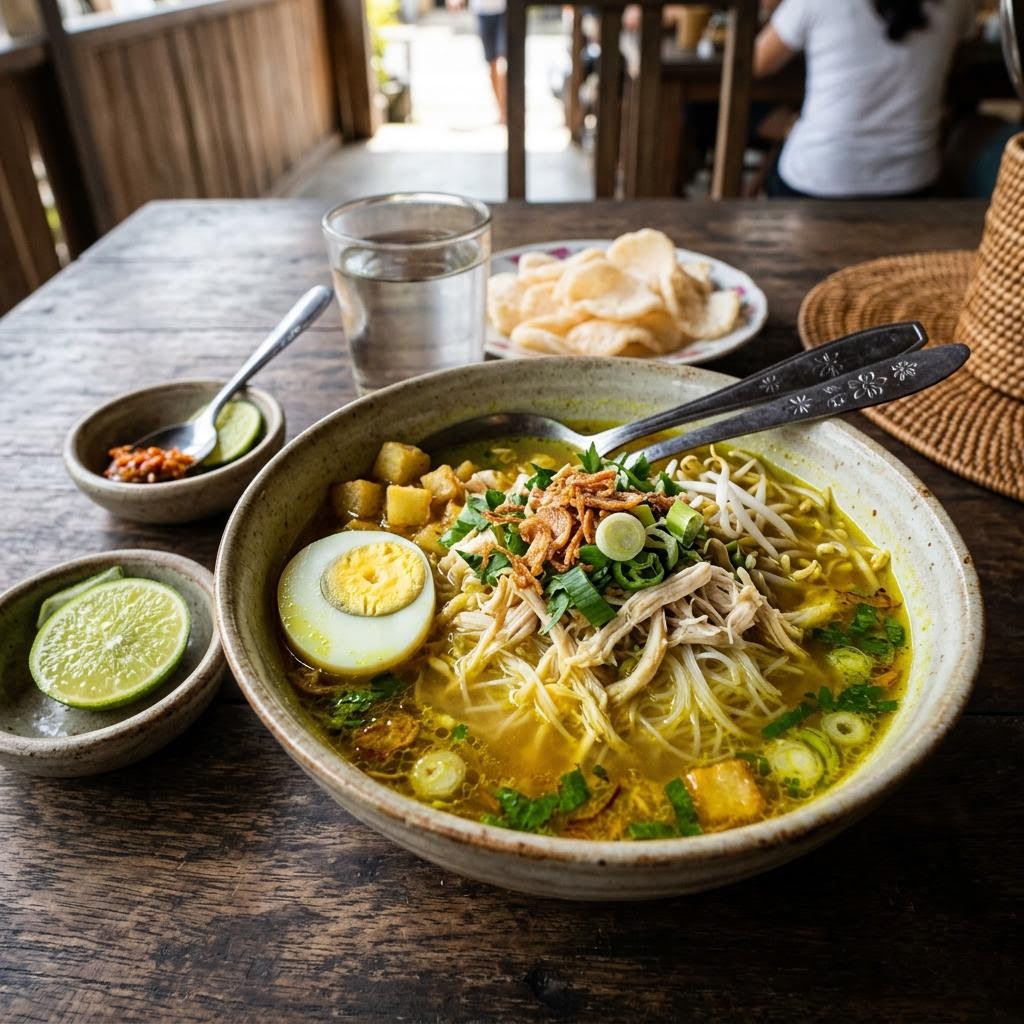
Soto Ayam — golden turmeric chicken broth — is a restorative breakfast soup across Indonesia.
🌶
❌ No
IDR 15,000–40,000
Island-wide
⭐⭐ (to make)
1 hour
~310 kcal per serving
A glowing, golden broth built on turmeric, lemongrass, galangal, and slow-simmered chicken bones, finished with shredded poached chicken, rice vermicelli, hard-boiled egg, crispy shallots, and a squeeze of lime. Soto ayam is what Balinese people eat when they need comfort. It's available at most traditional warungs from early morning.
For the cheapest, most authentic street food in Bali, head to a pasar malam (night market). Kuta, Denpasar, Gianyar, and Singaraja all have excellent night markets where you can eat extremely well for under IDR 50,000.
Bali Seafood Guide
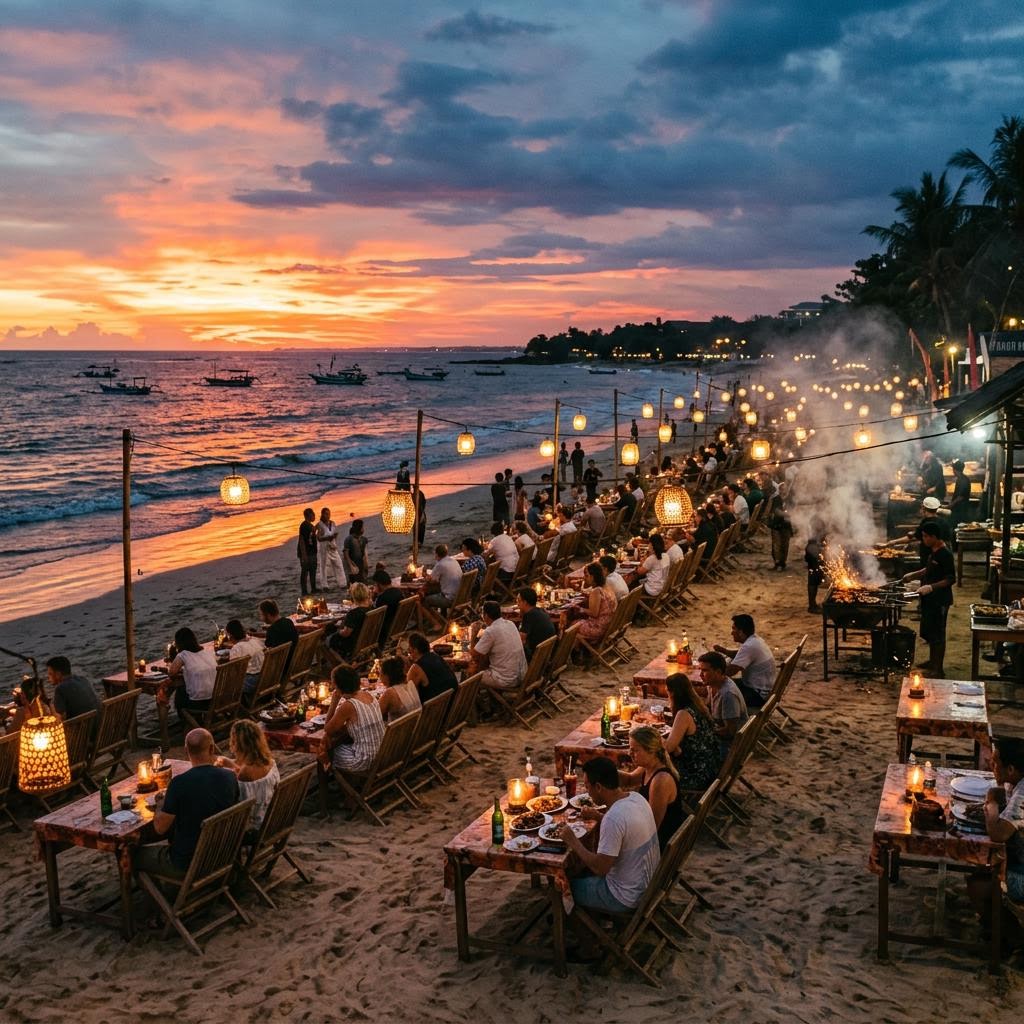
Jimbaran's beachfront seafood barbecues are one of Bali's most romantic dining experiences.
Ikan Bakar — Charcoal Grilled Fish
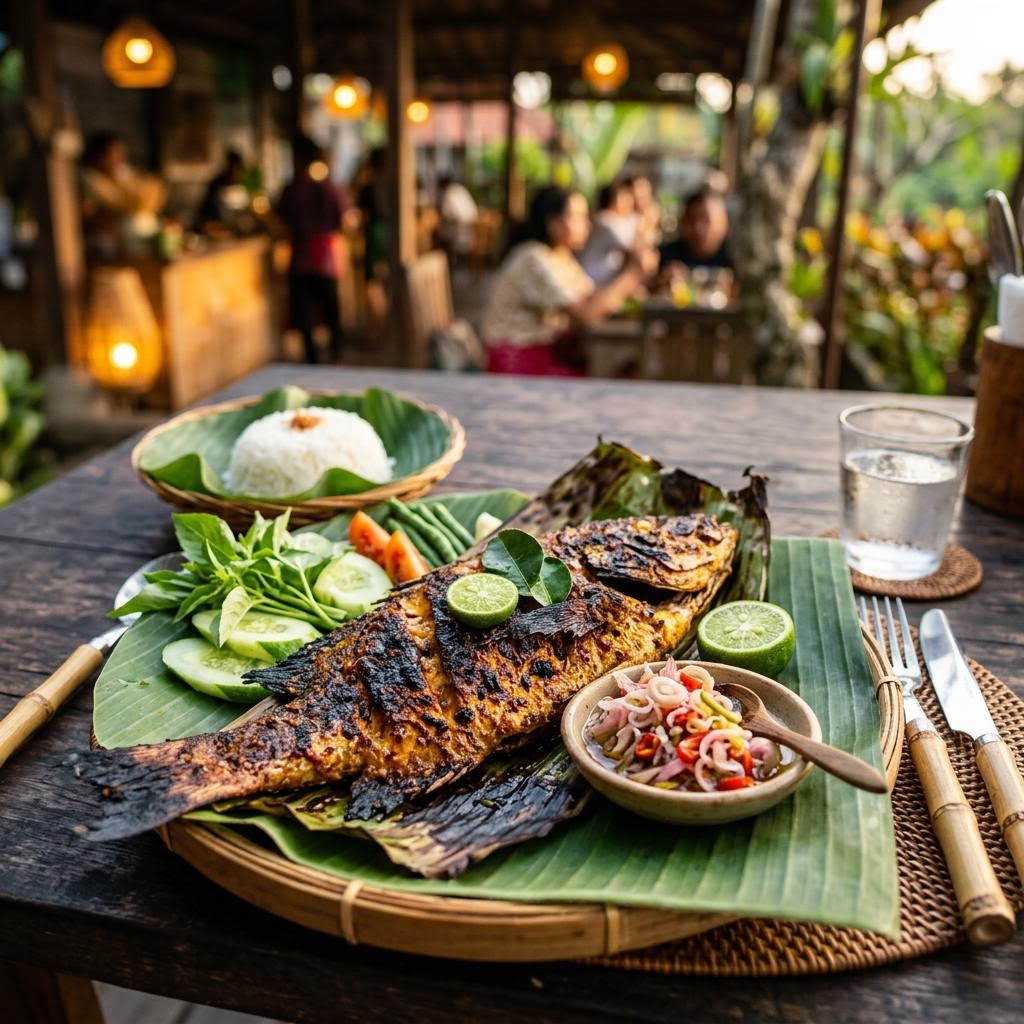
Ikan Bakar — charcoal-grilled whole fish with sambal — is the cornerstone of Balinese coastal cooking.
🌶🌶
✅ Fish / No meat
IDR 50,000–150,000
Jimbaran, coastline
⭐⭐⭐ (to make)
30 min
~400 kcal per serving
A whole fish — snapper, mackerel, pomfret, or barramundi depending on the day's catch — rubbed with base genep and grilled over coconut-husk charcoal until the skin blisters and chars at the edges. It's served with steamed rice, raw vegetables, and a generous scoop of sambal matah. Eating it by the water as the sun drops behind the headland is one of Bali's quintessential experiences.
Jimbaran Bay is synonymous with ikan bakar. Arrive around 5:30pm, choose your fish from the ice display, and eat with your feet in the sand as the sky turns orange. Tourist? Perhaps. Worth doing? Absolutely.
Sambal Matah — Bali's Raw Chilli Condiment
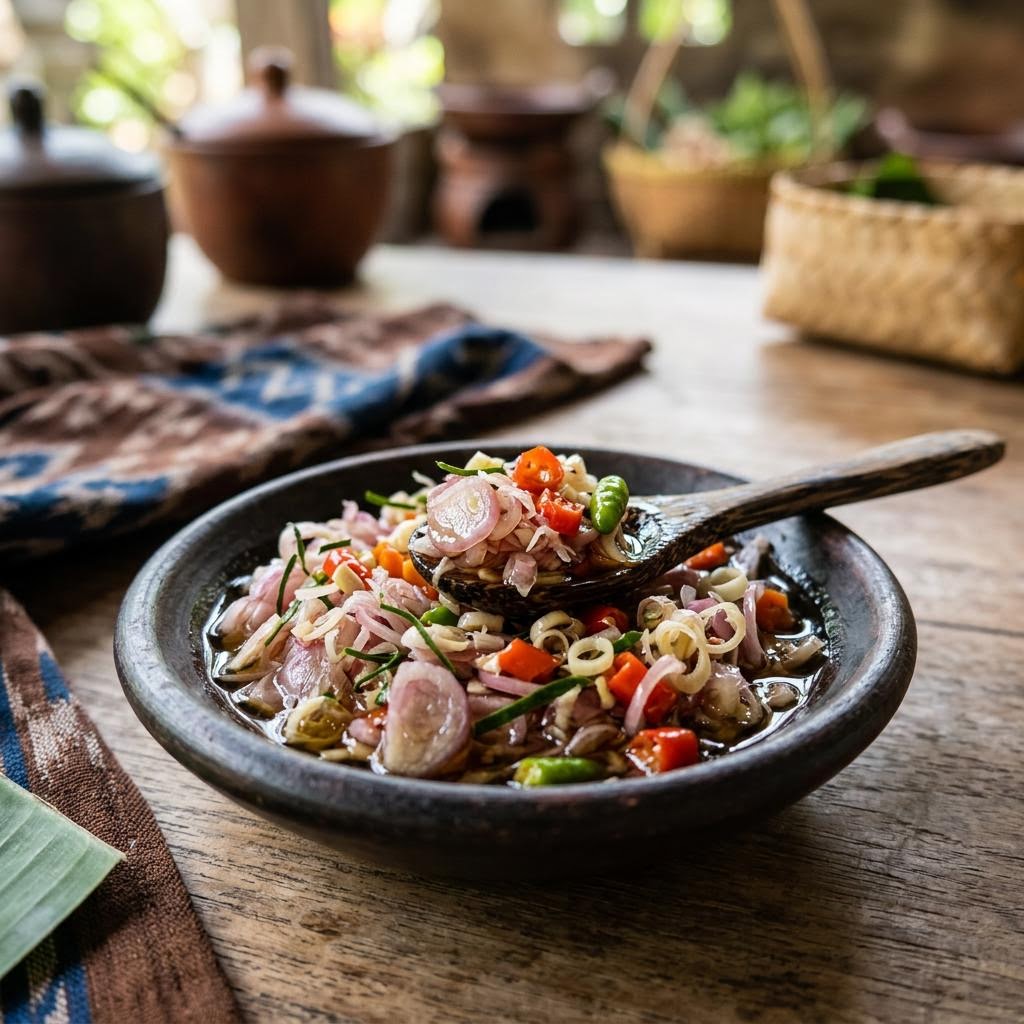
Sambal Matah — raw shallot, lemongrass, and chilli — is Bali's signature condiment.
🌶🌶🌶🌶
✅ Yes
IDR 5,000–15,000
Bali-wide
⭐ (to make)
10 min
~65 kcal per serving
Not a dish in itself but an essential accompaniment to almost every Balinese meal, sambal matah is made by thinly slicing raw shallots, lemongrass, lime leaves, and bird's eye chillies, then dressing them with a squeeze of lime and a drizzle of warm coconut oil. It's raw, fragrant, and fiercely fresh — the ideal foil to the richness of grilled meat or fish.
Vegetarian & Vegan Food in Bali
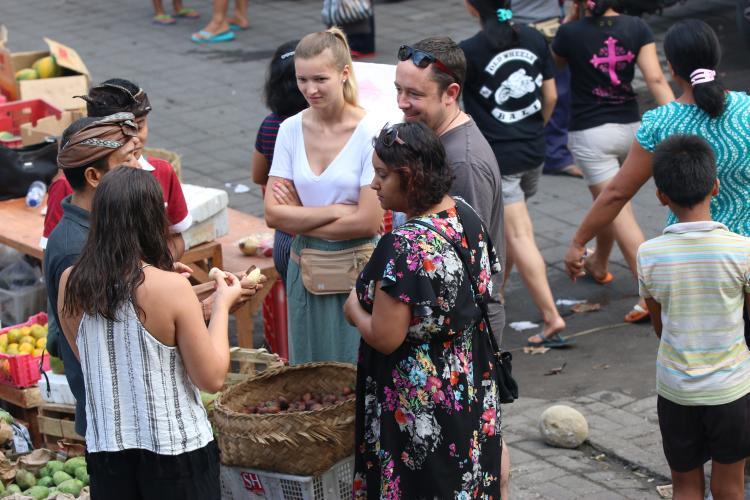
Bali is one of the world's most accommodating destinations for plant-based travellers.
Bali is probably the most vegetarian-friendly destination in Southeast Asia. The island's Hindu tradition, its deep connection to the land, and the explosion of wellness tourism have created a food scene where plant-based eating is not a compromise — it's a genuine culinary adventure.
Traditional vegetarian dishes worth seeking out include gado-gado (blanched vegetables with peanut sauce), tempeh manis (sweet fried tempeh), cap cay (stir-fried mixed vegetables), and urap (coconut and vegetable salad). In Ubud and Canggu, there are entire restaurants dedicated to elevated vegan cuisine that wouldn't look out of place in New York or London.
Always ask whether dishes contain terasi (dried shrimp paste) — it appears in many sambal recipes and isn't always obvious. Saying "tidak pakai terasi" (without shrimp paste) will be understood at any warung.
Balinese Desserts
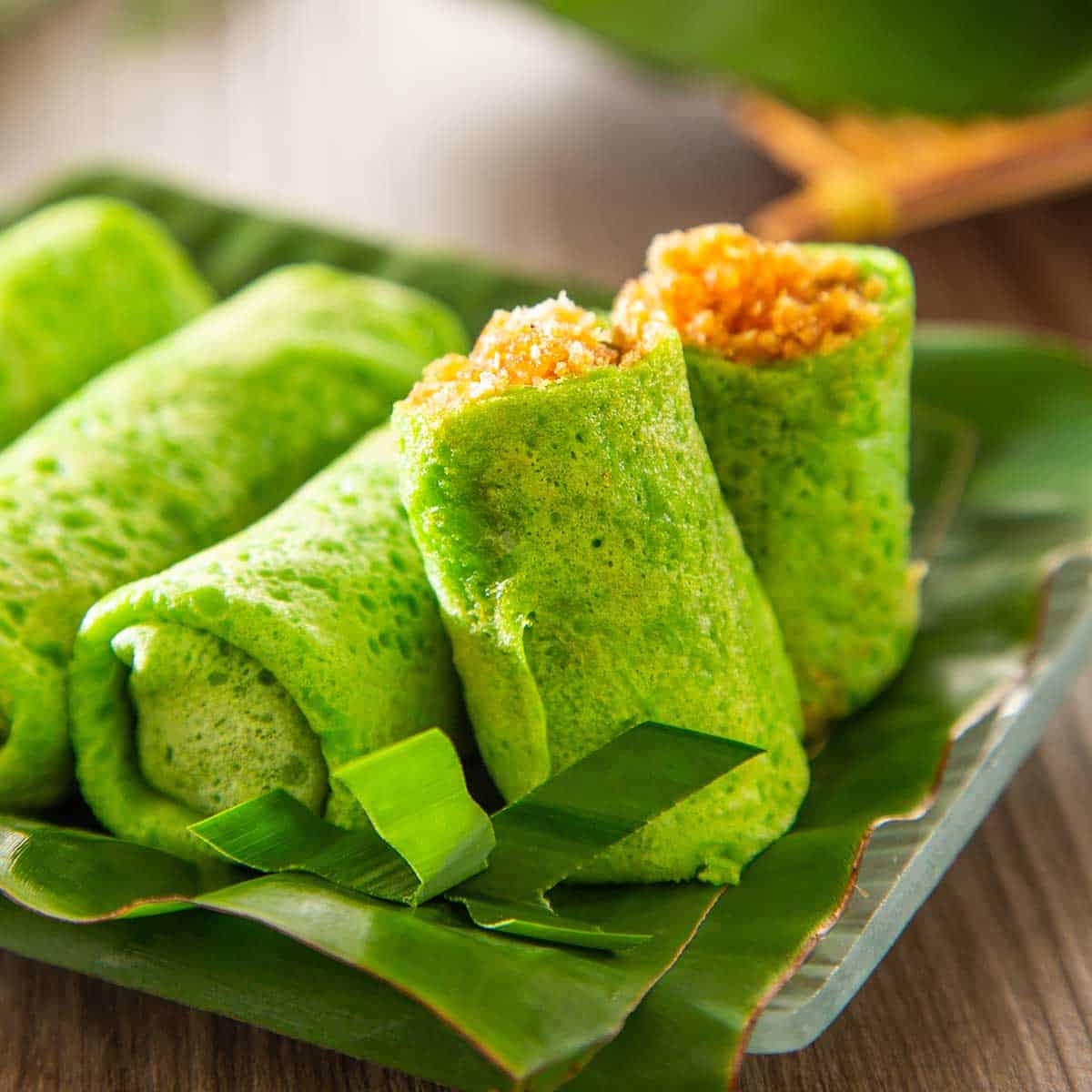
Balinese desserts are built on pandan, palm sugar, sticky rice, and coconut — restrained and deeply satisfying.
- Dadar Gulung — green pandan crepes filled with sweet grated coconut and palm sugar. Available at almost every morning market.
- Klepon — sticky rice balls coated in desiccated coconut, filled with liquid palm sugar that bursts on the first bite.
- Jaje Bali — traditional Balinese sweets, usually rice-based and brightly coloured with natural dyes from pandan and butterfly pea flower.
- Pisang Goreng — battered fried banana, served warm with palm sugar syrup.
- Es Campur — shaved ice with coconut milk, palm sugar syrup, jackfruit, avocado, and jelly.
Traditional Balinese Drinks
- Tuak — palm wine tapped fresh from coconut or lontar palms. Mildly alcoholic, slightly fizzy.
- Arak Bali — a spirit distilled from palm wine. Buy from a trusted, licensed seller only.
- Jamu — traditional herbal tonics made from turmeric, ginger, tamarind, and medicinal roots.
- Es Kelapa Muda — fresh young coconut water, served directly from the coconut. Available island-wide for IDR 10,000–25,000.
Balinese Coffee
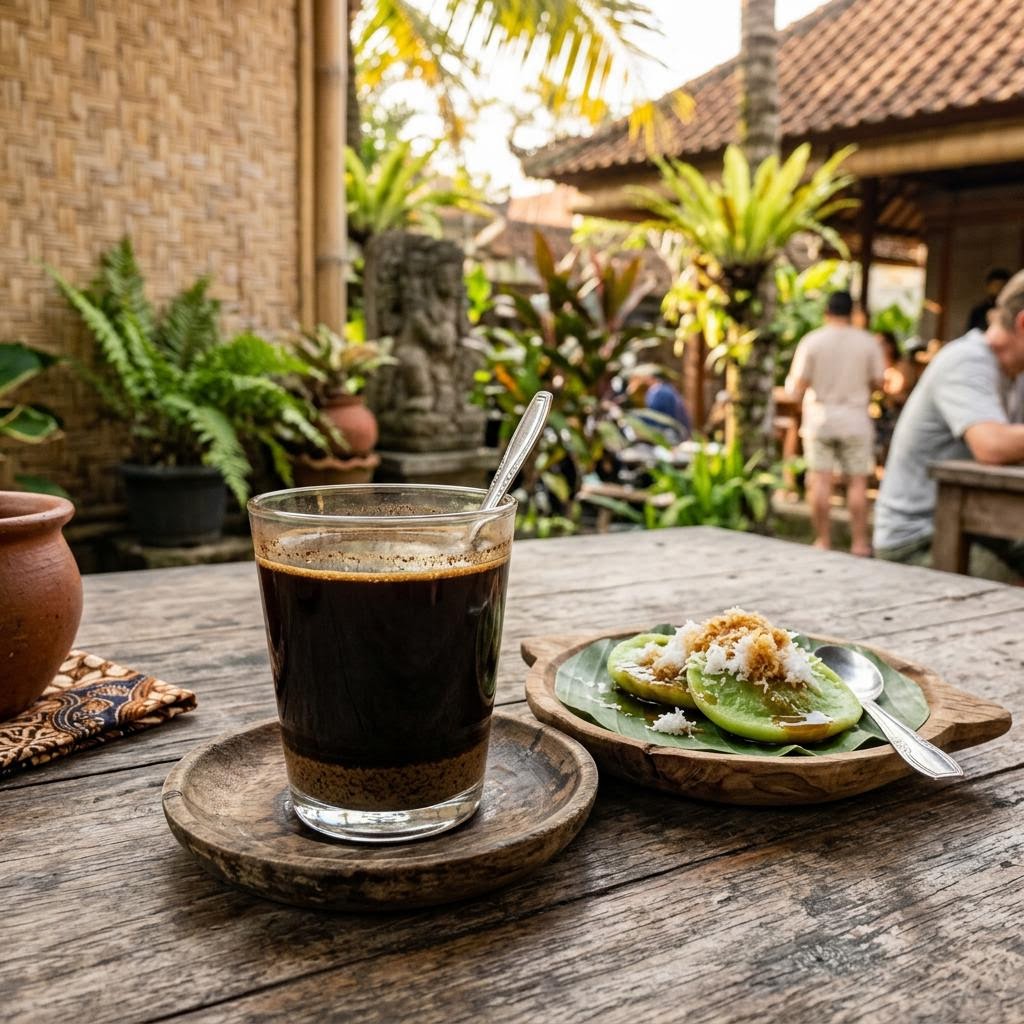
Balinese kopi tubruk — strong black coffee with grounds left in the glass — is the local way to start the day.
Bali grows excellent arabica and robusta coffee in the volcanic highlands around Kintamani and Munduk, and the island has developed a coffee culture that runs from traditional to world-class.
Kopi Tubruk is the traditional Balinese method: coarsely ground coffee poured into a glass of hot water and left to settle. It's strong, slightly bitter, and utterly caffeinating. Drink it slowly and stop before you reach the sludge at the bottom.
Kopi Luwak is the famous — and famously controversial — civet cat coffee. If you want to try it, visit a reputable highland plantation where you can see the civets in a natural habitat. Wild-sourced luwak coffee costs considerably more than the tourist stall variety.
Beyond tradition, Canggu and Seminyak have a world-class specialty coffee scene. Third-wave cafés sourcing Kintamani single-origin beans, served as pourover, AeroPress, or cold brew, sit alongside smoothie bowls and excellent pastries.
Kintamani coffee — grown at altitude around the volcanic caldera lake — is considered Bali's finest. Ask for it specifically at coffee plantations and specialty cafés.
Food Markets in Bali
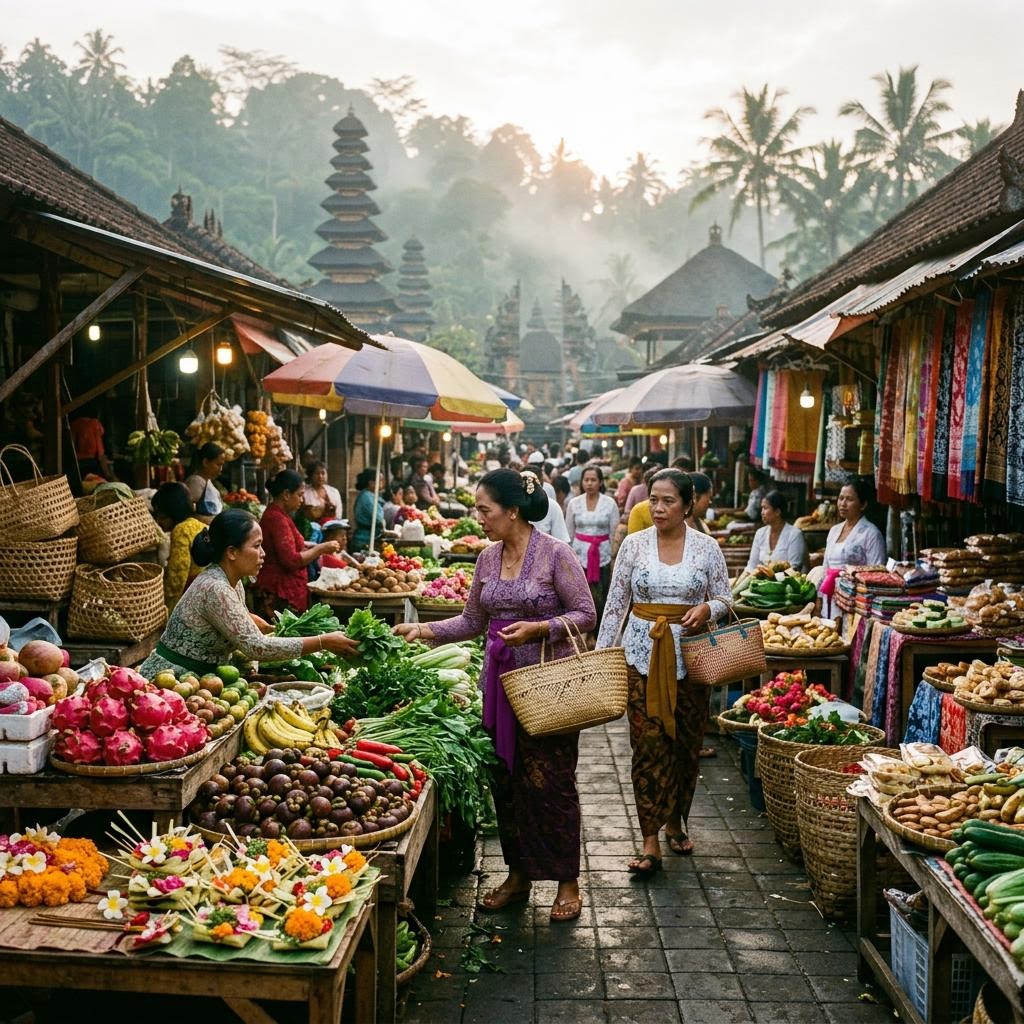
Ubud's morning market is one of the best food markets in all of Southeast Asia — arrive before 7am.
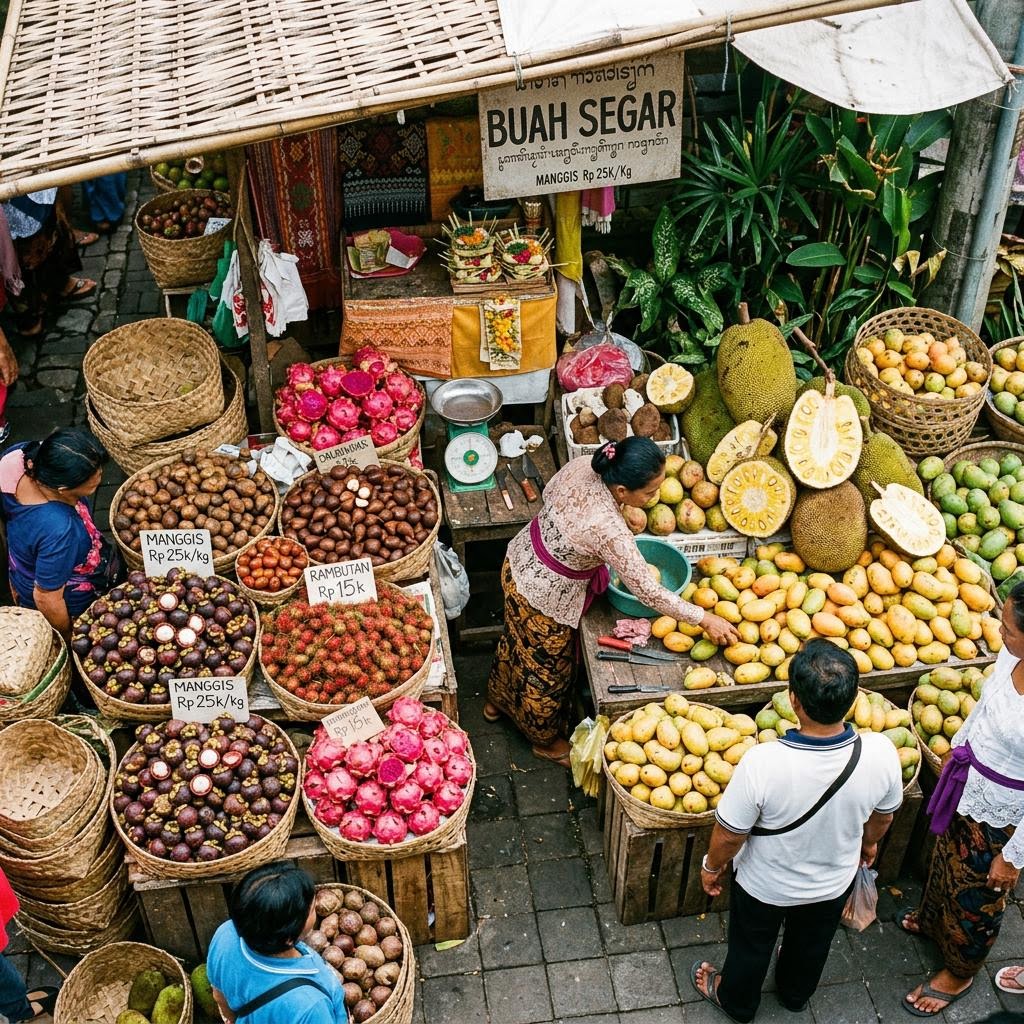
Bali's fruit markets showcase extraordinary tropical produce — mangosteen, rambutan, salak and more.
- Ubud Morning Market (Pasar Ubud) — open from 4am to around 9am. Go early for local vendors selling jaje Bali, fresh produce, spices, and cooked breakfasts.
- Badung Market, Denpasar — a four-storey traditional market. Lower floors dedicated to fresh produce, spices, and street food.
- Gianyar Night Market — open from around 5pm. Try the babi guling, sate lilit, ayam betutu, and various rice dishes. A full meal rarely exceeds IDR 30,000.
Best Places to Eat in Bali by Area
Ubud
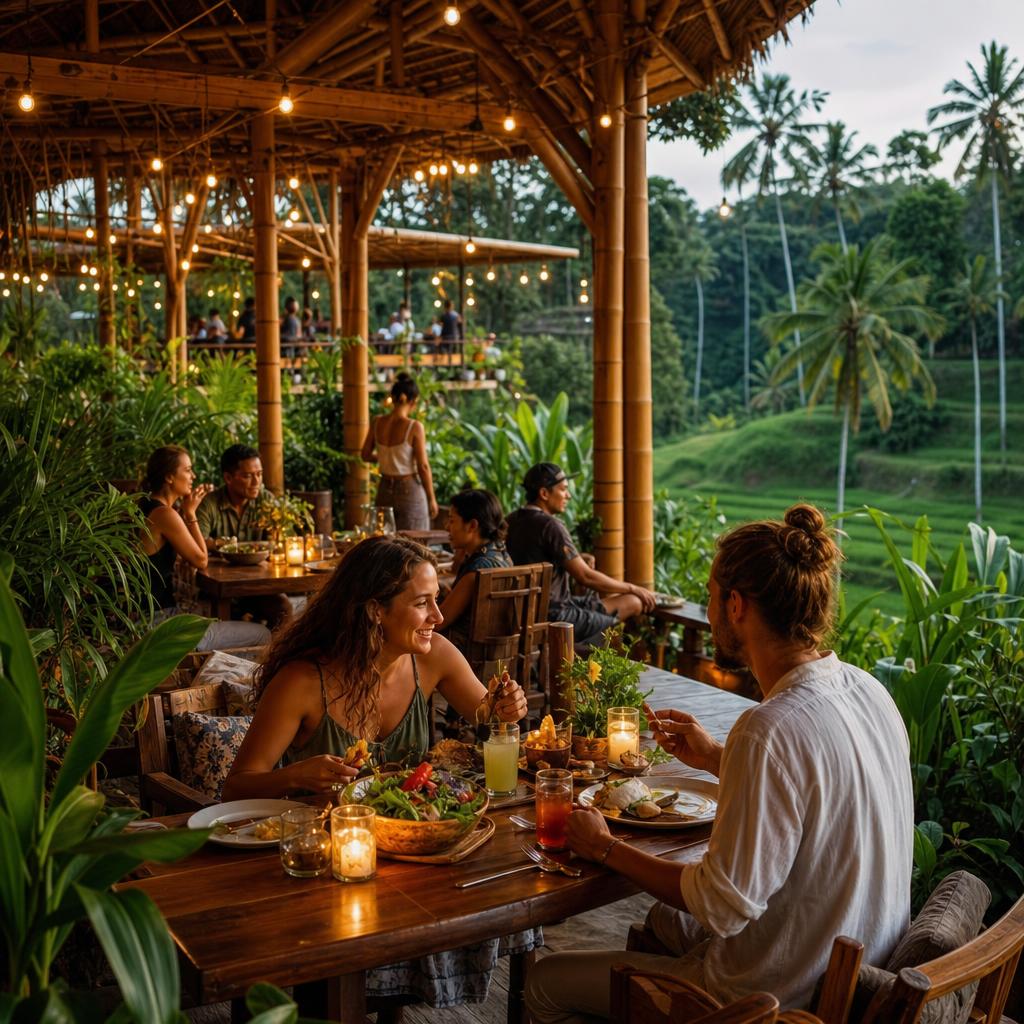
Ubud offers Bali's most diverse food scene, from traditional warungs to award-winning restaurants.
Ubud is Bali's culinary capital, full stop. The mix of traditional warungs, excellent vegetarian restaurants, sophisticated international dining, and one of the island's best morning markets makes it the most rewarding town to eat in. Read the full Ubud guide.
Don't miss: Warung Babi Guling Ibu Oka, the morning market at dawn, and the rice terrace restaurants north of town.
Seminyak
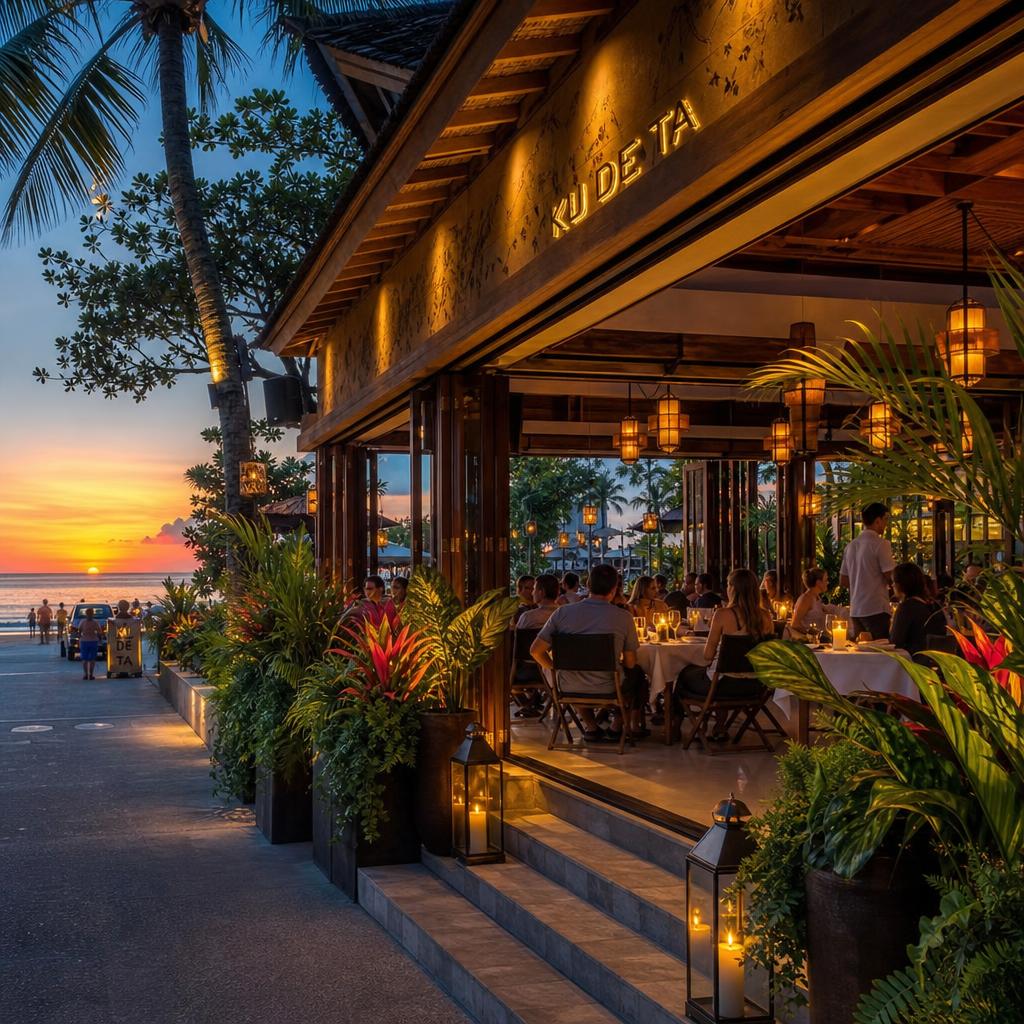
Seminyak has Bali's most sophisticated restaurant scene — from beachfront fine dining to excellent backstreet warungs.
Seminyak is Bali's most sophisticated dining neighbourhood. High-end international restaurants sit alongside excellent local warungs and beach clubs that do food surprisingly well. Explore the Seminyak guide.
Canggu

Canggu has the best café scene in Bali — specialty coffee, excellent brunch, and a relaxed, creative atmosphere.
Excellent specialty coffee, inventive brunch culture, strong vegan options, and a cluster of excellent Japanese restaurants. See the Canggu guide.
Sanur
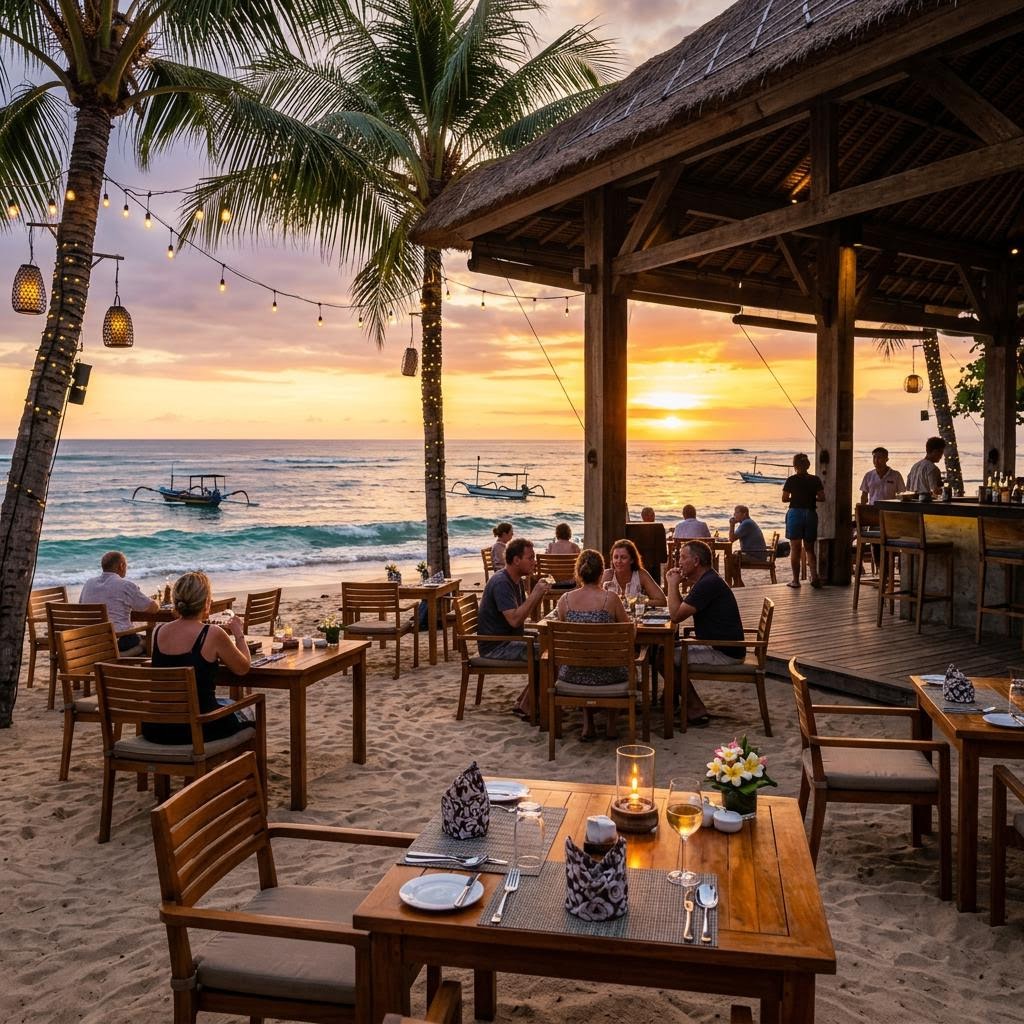
Sanur's beachfront restaurants offer calm, relaxed dining with excellent fresh seafood.
Excellent seafood, consistent Indonesian cooking, and some of the island's best value-for-money dining. Read the Sanur guide.
Jimbaran
Jimbaran is synonymous with seafood. The bay's famous row of beachfront fish restaurants has tables set directly on the sand, grills working from late afternoon. Choose your fish from the ice display and let the grill do the rest while the sun drops into the ocean.
Nusa Dua

Nusa Dua's resort restaurants offer polished dining in some of Bali's most beautiful settings.
Nusa Dua has consistently good hotel restaurants, but the most interesting eating is found just outside the resort gates in Bualu and along Jalan Pratama, where local warungs serve excellent Balinese food at a fraction of resort prices.
Uluwatu
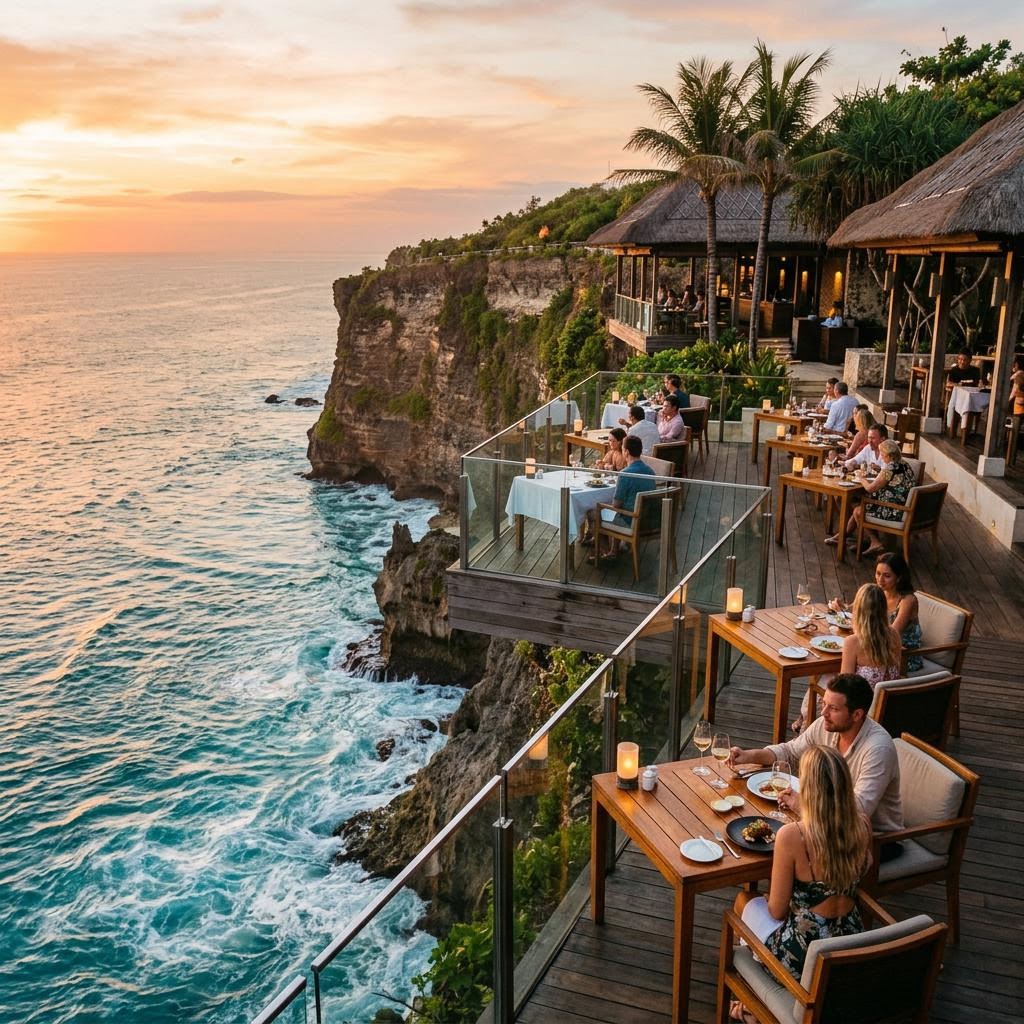
Uluwatu's cliff-top restaurants serve excellent food with some of Bali's most dramatic views.
Cliff-edge restaurants with panoramic Indian Ocean views, excellent pizza and seafood, and a growing number of chef-driven restaurants serving local ingredients with international technique. The sunsets are the finest on the island.
Traditional Warung — Bali's Soul Kitchen
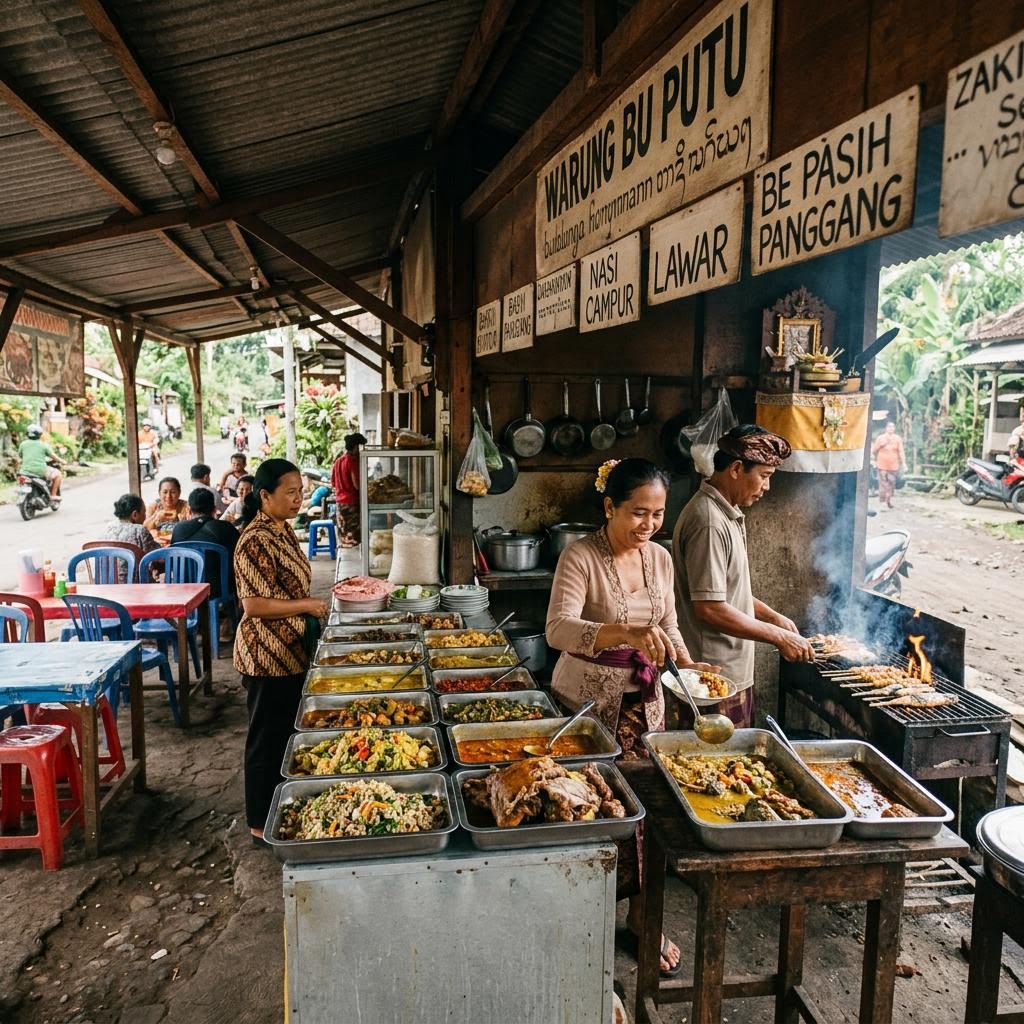
A traditional warung is the heart of Balinese food culture — unpretentious, affordable, and often excellent.
No food guide to Bali is complete without a tribute to the warung. These family-run eateries — often no more than a few plastic tables under a corrugated iron roof — are where Balinese food is at its most authentic. The cook is usually a grandmother or aunt. The menu rarely changes. The prices are extraordinary. And the food, more often than not, is better than anything you'll eat in a restaurant with a reservation policy.
Pointing, smiling, and saying "nasi campur, satu" (nasi campur, one) will get you fed almost anywhere.
Food Etiquette in Bali
Eating with Balinese families and following local customs deepens the experience enormously.
- Use your right hand to pass and receive food. The left hand is considered unclean in Balinese culture.
- Don't point at food with your index finger — use your thumb instead, or gesture with an open hand.
- At a ceremony, wait to be invited before eating. Ceremonial food is blessed and distributed by elders in order.
- Don't waste rice. Balinese culture holds rice as sacred — leaving large amounts uneaten can cause quiet offence.
- Pay at the end. Say "minta nota" (the bill, please) to signal you're ready to settle up.
- Tipping is appreciated but not obligatory at warungs. At restaurants without a service charge, 10% is generous and welcome.
Food Safety in Bali
- Look for busy stalls — high turnover means food is fresh.
- Watch the cook — food prepared fresh in front of you is almost certainly safe.
- Avoid pre-cooked foods sitting uncovered in the heat for extended periods.
- Drink bottled or filtered water. Tap water is not safe to drink anywhere in Bali.
- Ice at proper restaurants is made from filtered water. Use your judgement at very basic roadside stalls.
- Arak caution: There have been documented cases of methanol poisoning from counterfeit arak. Buy only from licensed shops or reputable bars.
If you experience severe stomach upset, seek medical attention promptly. Bali has good private medical clinics in all major tourist areas. Travel insurance covering medical costs is strongly recommended.
Frequently Asked Questions About Bali Food
What is the most famous food in Bali?
Babi guling (spit-roasted pork) is the dish most associated with Balinese cuisine. It's the island's ceremonial centrepiece and the meal most visitors make a pilgrimage to eat. Nasi campur (mixed rice) is the most commonly eaten everyday dish.
Is Bali good for vegetarians?
Bali is one of the best destinations in Southeast Asia for vegetarians and vegans. Traditional dishes like tipat cantok, lawar nangka, gado-gado, and tempeh manis are plant-based by design, and the café scenes in Ubud and Canggu offer outstanding vegan restaurants.
How much does food cost in Bali?
At a local warung, a full meal costs between IDR 20,000 and IDR 50,000 (approximately USD 1.25–3). Mid-range restaurants charge IDR 80,000–200,000 per person. Fine dining and resort restaurants typically run IDR 300,000–600,000 per person.
What should I eat in Bali as a first-time visitor?
Start with nasi campur at a local warung, then work through babi guling, sate lilit, and lawar. Try sambal matah with everything. End a day at the beach with ikan bakar at sunset in Jimbaran.
Is street food safe to eat in Bali?
Yes, provided you choose busy stalls that serve food cooked fresh to order and follow basic food safety common sense. The vast majority of travellers eat street food throughout their trip without any issues.
What is base genep?
Base genep is the foundational spice paste of Balinese cooking — a wet grind of up to twenty ingredients including shallots, garlic, turmeric, galangal, lemongrass, candlenuts, pepper, and chilli. It seasons almost every significant Balinese dish.
Where is the best place to eat in Bali?
For traditional Balinese food: Ubud and Gianyar Night Market. For seafood: Jimbaran. For café culture: Canggu. For upscale dining with incredible views: Uluwatu. For everyday local food: anywhere with a busy warung.
Can I take a cooking class in Bali?
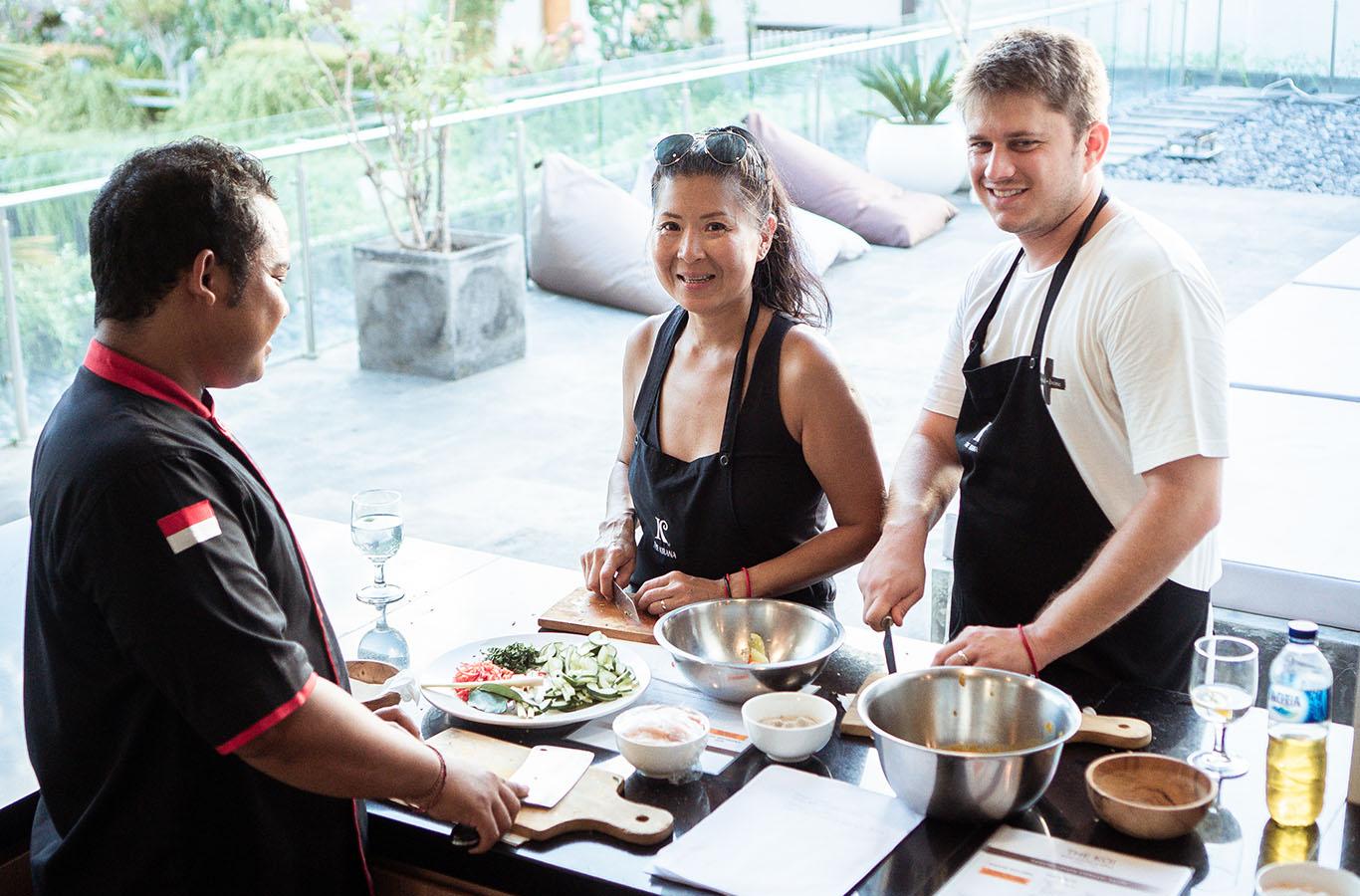
Yes, and it's one of the most rewarding things you can do. Most classes include a morning market visit, hands-on instruction in making base genep, and a shared meal. Use the AI Trip Planner to build a custom itinerary that includes cooking classes.
Conclusion
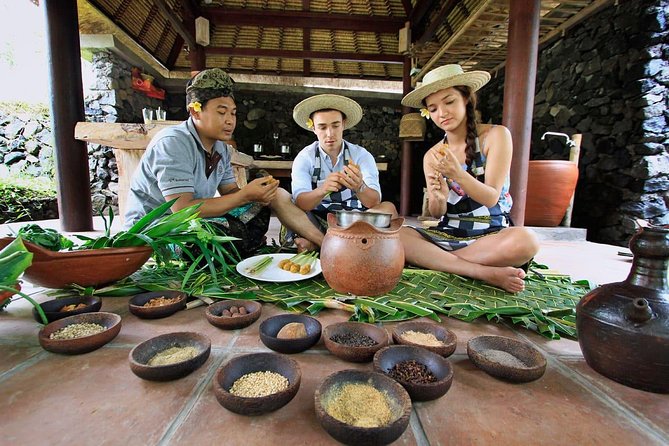
A Balinese cooking class is one of the best ways to take the island's food culture home with you.
Bali's food culture is not a side attraction — it's a reason to come. The island's cuisine is ancient, complex, and surprisingly accessible once you know where to look. Eat nasi campur for breakfast in a backstreet warung. Chase babi guling through Ubud at lunchtime. Watch a whole fish go from the ice display to the charcoal grill to your table on Jimbaran beach as the sun sets over the Indian Ocean. Drink fresh coconut water. Take a cooking class. Go to a night market.
The flavours of Bali — the deep, smoky warmth of base genep, the brightness of sambal matah, the fragrance of banana-leaf-steamed fish, the sweetness of palm sugar desserts — stay with you long after you've left. They're the taste of a place that has been feeding people with extraordinary generosity for centuries.
Ready to eat your way through Bali? Use the VisitBali AI Trip Planner to build a custom itinerary with food markets, cooking classes, and restaurant recommendations. Or browse guides to Ubud, Seminyak, Canggu, and Jimbaran.