Bali Rice Terrace Cycling: Routes, Planning and What to Expect
By VisitBali.com Editorial Team · 8 min read · Published 22 November 2024 · Last updated 15 September 2026
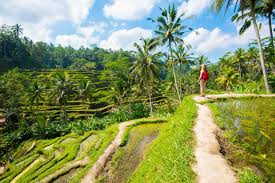
For a scenic, mostly low-speed introduction to rural Bali, choose a guided bicycle ride through the rice fields around Ubud or a longer route near Jatiluwih. Expect narrow lanes, uneven surfaces, short climbs, heat and active farms rather than a continuous paved cycle path. Early morning is the most comfortable time; a guide, water and a bicycle matched to your height make a bigger difference than speed.
Which rice-terrace area suits your ride?
Ubud-area rides are convenient from central Bali and usually combine village lanes, farms and a gentle downhill section. Jatiluwih is farther from the south but offers a broader agricultural landscape and a quieter, more open ride. The terraces are working farms, so routes and access can change around planting, harvesting or local ceremonies.
| Area | Best for | Terrain and time | Planning note |
|---|---|---|---|
| Ubud villages | First-time riders and short half-days | Village lanes, gentle descents and occasional climbs; allow about 2–4 hours | Easy to pair with an Ubud stay; transfers are usually shorter |
| Jatiluwih | Wide terrace views and a quieter rural setting | Rolling roads and exposed sections; allow a half or full day including travel | Check route and entrance arrangements locally before setting out |
| East Bali village roads | Experienced cyclists wanting less-touristed scenery | More variable gradients and longer road sections | Use a route leader who knows current road conditions |
What the route is really like
The strongest part of the experience is the changing landscape: irrigation channels, footpaths between paddies, village compounds and farmers working the fields. The subak system coordinates water management through cooperatives and temples; it is a living agricultural system, not a themed attraction. The UNESCO description of Bali's subak landscape explains why water, farming and community are inseparable here.
Do not assume a field path is public. Stay with the designated route, ask before photographing people and avoid riding through planted plots or blocking irrigation channels. Harvest and planting periods can make a familiar view look completely different, while wet-season rain can make dirt surfaces slippery.
Transport, timing and cost planning
- Getting there: From Ubud, a tour transfer is often simplest. From Seminyak, Canggu or the airport, morning traffic can make the journey much longer than the map suggests. Jatiluwih is best treated as a day trip or combined with a stay in central or north Bali.
- How long: Allow at least half a day for a short guided ride and more time for changing, transfers and a meal. A full-day outing may include a longer ride, terrace walk or farm visit.
- Cost: Prices vary with bike quality, guide, meals, entrance contributions and private transport. Confirm what is included rather than comparing headline tour prices alone.
- When to go: The dry-season months are generally easier for cycling, but shoulder periods can be cooler and less busy. In the wet season, ask whether the operator changes the route after heavy rain.
Bike, family and accessibility considerations
- Ask for a test ride and check brakes, tyres, saddle height, helmet fit and whether a child seat or smaller bicycle is available.
- Children who can manage traffic-free cycling may enjoy the quieter lanes, but descents, slippery paths and heat require close supervision. A support vehicle or shorter route is useful for mixed-ability groups.
- Most terrace routes are not step-free: narrow paths, stairs, bridges, mud and uneven ground can prevent wheelchair use. Ask the operator for a route map and surface description before booking; a village and viewpoint visit may be a better accessible alternative.
Responsible cycling checklist
- Carry refillable water, sun protection, insect repellent and a light rain layer.
- Wear closed shoes with grip; sandals are a poor choice for pedals and muddy paths.
- Leave offerings, crops, tools and irrigation structures undisturbed.
- Use a local guide or community-based operator where possible, and follow any village contribution or access rules.
- Keep your pace conservative on blind bends and give walkers, scooters and farm vehicles priority.
Pair a ride with the waterfall trekking guide only if everyone in your group still has enough time and energy; combining two active excursions can make for a long, hot day. For a slower cultural day, browse the guide to Kecak performances and plan the show separately from your morning ride.