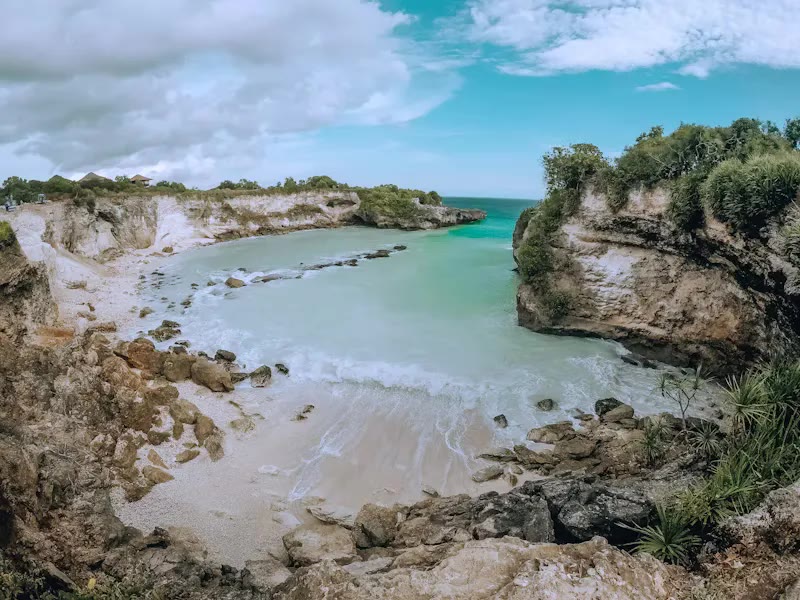
Quick answer: Nusa Lembongan is a compact, laid-back island reached by fast boat from Sanur, with sandy bays, the Devil's Tear wave-spray cliffs, northern mangroves and a short crossing over the Yellow Bridge to Nusa Ceningan. A two-night stay gives time to explore without rushing; a day trip is possible, but sea activities and return-boat schedules need checking.
Lembongan combines small-island ease with a surprising range of coastlines: village lanes and guesthouses around Jungutbatu, sheltered-looking bays, a mangrove-fringed north and wave-battered cliffs in the south-west. It is the most convenient base for combining Ceningan with a snorkel or dive outing, while still feeling distinctly slower than Bali's mainland resort strip.
A good fit for couples, families with older children, snorkellers, divers and travellers who want island scenery without Penida's long road journeys. Strong currents, surf and limited transport options mean it is not a place to assume every beach is safe for swimming or every road is suitable for a novice scooter rider.
Where to Stay in Nusa Lembongan
Jungutbatu. Main village and a practical base for boat arrivals, cafés, dive shops and views towards Bali; accommodation ranges from simple rooms to resorts.
Mushroom Bay. A popular south-west bay with resort and dining options and access to local boat trips; confirm the exact landing point for your service.
Sandy Bay and Dream Beach. A scenic cliff-and-beach area close to Devil's Tear, better for a resort-style stay than for walking to every island service.
Mangos or the island interior. Quieter hillside and village locations can offer a slower stay, but usually require a scooter or arranged transfer.
Luxury: Boutique resorts and villas overlook bays and cliffs; compare current rates and confirm whether boat transfers and island transport are included.
Mid-range: Small hotels, bungalows and guesthouses are available around the main villages and bays; check access, breakfast and noise details.
Budget: Simple homestays and hostels are commonest near Jungutbatu and local lanes. Amenities vary, so check recent reviews and exact location before booking.
Stay in Jungutbatu for the easiest arrival and restaurant access, or choose Mushroom Bay for a more beach-focused base. If you pick a quieter cliffside property, arrange luggage transfer and evening transport in advance.
Things to Do in Nusa Lembongan
Top Attractions
Devil's Tear — a wave-cut limestone headland where ocean swell can send spray through rock openings; keep well back from edges.
Dream Beach — a photogenic cove with powerful surf and rip currents; admire the view and swim only when local conditions make it safe.
Mushroom Bay — a sheltered-feeling bay and common starting point for boat excursions; conditions still change with tide and weather.
Mangrove Forest — explore northern channels by locally operated jukung or kayak where available.
Cross the Yellow Bridge to Nusa Ceningan for the Blue Lagoon viewpoints, Mahana Point and Secret Point.
Join a guided snorkel or dive trip in the surrounding Nusa waters with a reputable operator.
Hidden Gems
Explore the quiet back lanes and seaweed-farming landscapes away from the main beaches.
Take a slow paddle through the northern mangrove channels rather than only viewing the coast from the road.
Seek out lesser-known sunset viewpoints on the west-facing shore while staying clear of cliff edges.
Best Experiences
A half-day guided snorkel excursion can combine nearby reefs and, where conditions permit, Penida-area sites; confirm route, safety equipment and return time.
Spend a full day on a scooter or with a local driver visiting the island's different coasts, then cross the Yellow Bridge to Ceningan.
Try a beginner lesson or surf outing only with local guidance and conditions appropriate to your ability.
Take a mangrove boat or paddle trip with a local guide and keep a respectful distance from wildlife.
Getting Around Nusa Lembongan
Hotel or local transfer — Arrange a pickup from the landing point, especially with luggage or accommodation away from the main villages. (Confirm the transfer charge with your accommodation or boat operator before arrival.)
Scooter — A common way to explore for riders with a valid licence and experience; roads can be narrow, uneven and shared with pedestrians. (Rates vary; check current rental terms, helmet availability and insurance exclusions.)
Open-sided buggy or local car — Useful for groups, families and visitors who do not want to ride; availability is limited and should be booked ahead. (Request a current quote for the route and duration.)
Boat excursions — Use established operators for snorkelling and transfers to nearby islands; follow crew directions and wear provided flotation equipment. (Prices depend on route, group size and inclusions; compare current offers.)
Confirm which beach or harbour your fast boat uses, since Lembongan has more than one landing area and conditions may affect operations. The Yellow Bridge is for pedestrians and small two-wheelers, not ordinary cars. Roads are dark in places after sunset; plan your return rather than riding unfamiliar lanes late.
Best Time to Visit Nusa Lembongan
April–October — Typically drier with more settled spells. Often convenient for boat transfers and outdoor plans, although crossings and snorkelling still depend on daily sea conditions.
November–March — Wetter season with periodic heavy showers. Lush and potentially quieter, but rain and swell can change plans; book flexible activities where possible.
Year-round — Warm tropical island climate. Tides, currents and swell shape beach safety every day. Manta and other wildlife encounters are not guaranteed.
Peak season: July–August and holiday periods bring more visitors to the boat services and popular beach areas; reserve accommodation and crossings ahead.
Off-peak: Outside school holidays, midweek stays can feel calmer. Wet-season discounts and quieter roads may be offset by rain or disrupted sea excursions.
How Many Days in Nusa Lembongan?
Ideal: Two or three nights to explore Lembongan, cross to Ceningan and leave room for a snorkel or mangrove outing.
Quick visit: A day trip can cover a few land highlights or one sea excursion, but trying to do both thoroughly is rushed.
Slow travel: Four or five nights suit divers, surfers, families and anyone wanting a flexible island break rather than a checklist.
Sample Nusa Lembongan Itinerary
Day 1 — Arrive and discover the coast
Morning: Take a confirmed fast boat from Sanur and arrange your transfer from the landing point.
Afternoon: Settle in, explore Jungutbatu or Mushroom Bay, and check the local conditions before swimming.
Evening: Watch the sunset from a safe west-coast viewpoint or a beachside venue.
Day 2 — Water and mangroves
Morning: Join a reputable snorkel or dive operator if sea conditions are suitable, or paddle the northern mangrove channels.
Afternoon: Rest over lunch, then explore the island's villages and coastline with a local driver or confident scooter ride.
Evening: Dine near your base and confirm the next day's boat timing.
Day 3 — Ceningan and departure
Morning: Cross the Yellow Bridge and visit Ceningan viewpoints, including Blue Lagoon from safe viewing areas.
Afternoon: Stop at Mahana Point or Secret Point if open and conditions permit, then return to collect luggage.
Evening: Board the confirmed return service; keep a buffer for island transfers and boarding.
Costs & Daily Budget in Nusa Lembongan
Accommodation: From simple guesthouses to boutique resorts, rates vary substantially by season and location. Compare current listings and confirm boat or luggage transfers.
Food: Local warungs provide lower-cost meals, while beach clubs and resort restaurants are pricier. Check menus and service charges before ordering.
Activities: Mangrove paddles, surf lessons, diving and snorkel trips are priced by operator and inclusions; request current rates and clarify equipment and transfers.
Transport: Fast-boat fares, local transfers and scooter rentals change seasonally. Confirm the correct landing point, return time and any luggage charges.
Budget: A simple stay with local meals and limited activities can keep spending modest; include the return boat fare and transfers in your budget.
Mid-range: Allow for comfortable lodging, local transport and one guided water activity; prices depend heavily on operator and season.
Luxury: Resort stays, private transfers, beach-club dining and private boat trips add up quickly; check current all-in rates.
Pros & Cons of Nusa Lembongan
Pros
Compact enough to explore at a relaxed pace.
Easy access from Sanur by fast boat.
A mix of bays, cliffs, villages and mangroves.
Yellow Bridge makes Ceningan a natural addition.
Cons
Currents and surf make some beaches unsafe for swimming.
Roads and transport are less developed than on Bali.
Boat schedules and sea excursions can change with conditions.
Popular viewpoints and bays can be busy during peak periods.
Nusa Lembongan Travel Tips
Cultural etiquette
Respect local ceremonies and offerings, and dress modestly when visiting temples.
Ask before photographing residents or seaweed farms.
Choose locally run operators where possible and avoid leaving rubbish on beaches or in mangroves.
Common mistakes to avoid
Don't assume Dream Beach or Devil's Tear is a safe swimming area.
Don't book a tight same-day boat connection without checking schedules and weather policies.
Don't rent a scooter unless you have appropriate licensing and riding experience.
Don't plan to cross the Yellow Bridge by car; arrange luggage transfer separately if needed.
Nusa Penida — The larger neighbouring island has dramatic cliffs, remote beaches and a separate network of long road journeys; plan a dedicated visit.
Devil's Tear and Dream Beach — A west-coast outing for dramatic surf scenery; stay behind barriers and away from cliff edges.
Sanur — Mainland Bali's boat gateway and a convenient place to stay before or after an island crossing.
Nusa Lembongan FAQs
How do I get to Nusa Lembongan?
Fast boats commonly run from Sanur, but operators, landing points and schedules vary. Check current departure details and allow time for boarding and sea conditions.
How many nights should I stay?
Two nights is a useful minimum for the main island sights and a Ceningan visit. Add nights for diving, surfing or a slower pace.
Can I swim at Dream Beach?
The cove can have powerful surf and rip currents. Check conditions with local staff and do not swim when warnings or dangerous waves are present.
Can I visit Nusa Ceningan from Lembongan?
Yes. The islands are connected by the Yellow Bridge, which pedestrians and small two-wheelers can cross. Check local access and conditions before setting out.
Is snorkelling with manta rays guaranteed?
No. Wildlife sightings are never guaranteed, and currents can be strong. Choose a reputable operator and follow its safety briefing.
Is a day trip enough?
It is possible to visit for a day, but choose either a land-focused circuit or a boat excursion and confirm your return service; an overnight stay is less rushed.
Related Bali Travel Guides
Nusa Penida Guide — Compare Lembongan's compact bays with Penida's rugged cliff circuits.
Nusa Ceningan Guide — Plan the Yellow Bridge crossing and Ceningan's coastal viewpoints.